About the Report
What does productivity look like when you’re the one making the decisions?
That question drives this year’s Executive Productivity Report. Now in its fifth edition, the report draws on a survey of 517 business leaders, founders, and senior executives. This year’s respondents lean toward the people closest to the work: owner-led businesses making their mark in a volatile 2026 market.
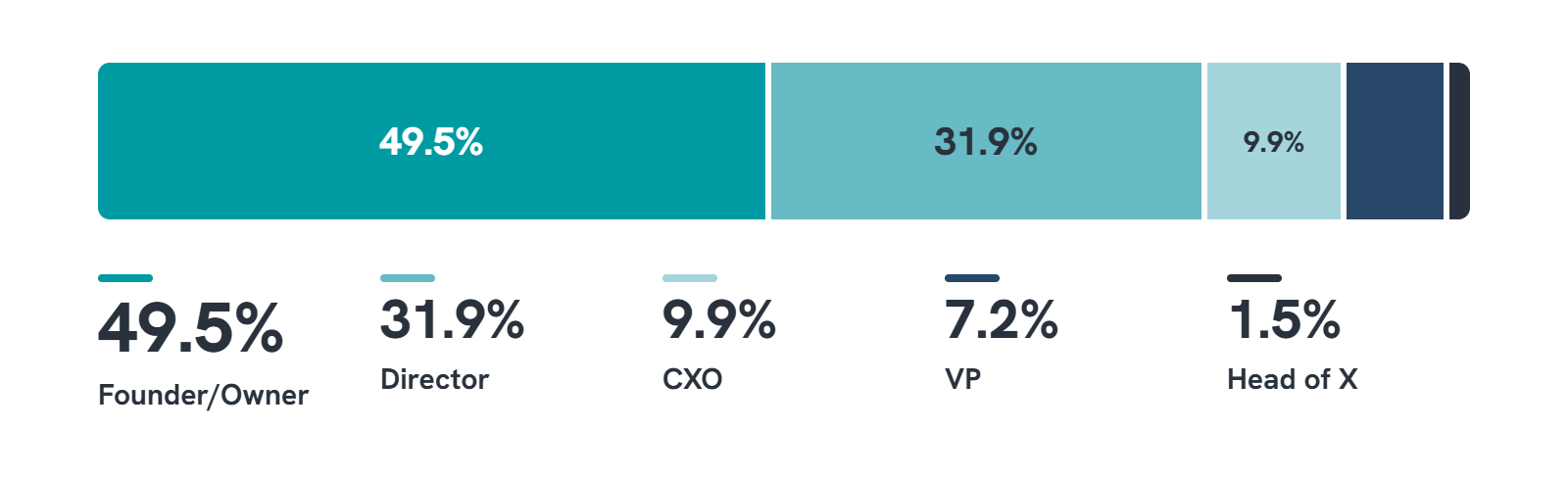
- 49.5% are founders or owners
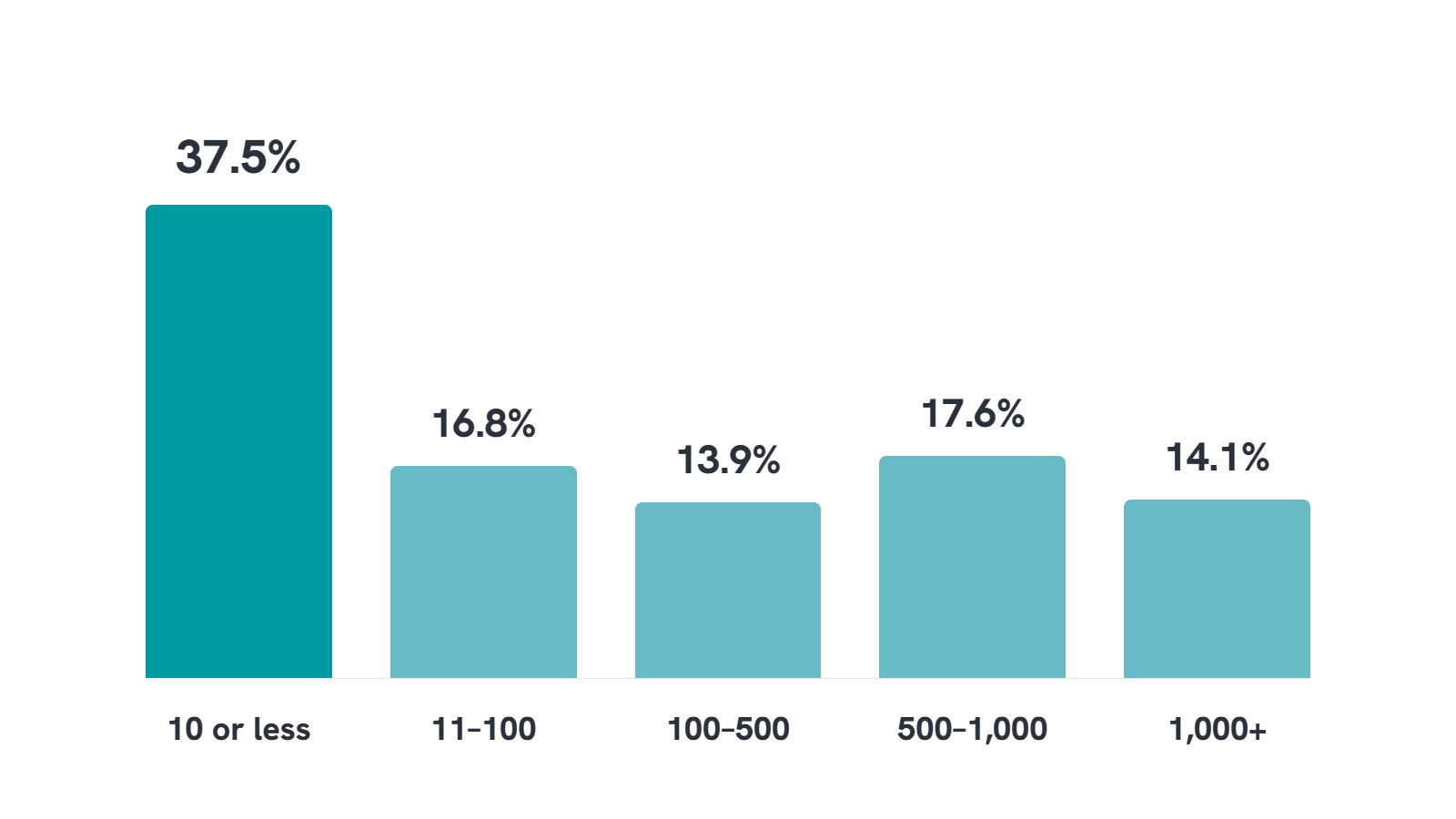
- 37.5% work at companies with 10 or fewer full-time employees
That makes this edition a close look at how lean, owner-led companies get more done with less.
Why the Timing Matters
We ran our survey in September 2026, as new research showed how deeply AI has reached into the workplace.
Gallup finds that 32% of U.S. employees now use AI at work a few times a week or more. Among employees whose organizations have implemented AI, 65% say it has improved their productivity.
The New York Fed’s August regional business survey tells a similar story. More than 60% of service firms and about half of manufacturers in the region now use AI, up from 40% and 26% a year earlier. In 2024, those numbers were 25% and 16%.
Technology is clearly changing the market. We wanted to see what that looks like from the leader’s chair.
Fresh Data for the Leaders Building Productive Teams
Each year, our survey tracks how the way we work is changing. The goal is to give decision-makers current, practical data for building productive teams (and protecting their own time along the way).
The Evolution of Productivity in 2026
Last year’s report described 2025 as a year of intentional evolution, a step beyond the survival-and-adaptation mode of the post-COVID workplace. This year’s results point to something different: recalibration.
Compared with 2025, more leaders work remotely, and fewer follow formal productivity systems. Tech stacks are getting smaller. AI use is holding steady, but complete trust in it has fallen.
The productivity picture is mixed. Most leaders (93.4%) say their productivity improved or held steady over the past year. However, fewer report real gains than in 2025, and slightly more report a decline.
Six Key Takeaways to Note for 2026
-
Fewer leaders follow a formal productivity system. 43.3% use one, down 20.7 points from 64% in 2025.Remote work reached a new high. 27.1% of leaders work fully remotely, up from 14% in 2025 and above the previous peak of 21% in 2022. The share working fully in the office dropped from 48% to 39.7%.
-
Tech stacks are getting leaner. 40.4% of leaders now use just one or two apps or AI tools each day, up from 23%. The share using three to five fell from 61% to 49.7%.
-
AI use is steady; complete trust is not. About three in four leaders use AI (73.3%, compared with 78% in 2025). Yet the share who trust their AI tools entirely fell from 26.4% to 16.1%.
-
Fewer leaders feel more productive. 54.9% say their productivity improved over the past year, down from 68% in 2025. Another 38.5% say it stayed the same, and 6.6% report a decline (up from 4%).
-
Finding skilled talent remains the biggest hiring hurdle. 47.2% of leaders name it as their top hiring challenge, nearly three times the next most common answer (budgeting uncertainty, at 16.1%).
A Word From Our Founder
Every year, I read this report looking for the big shift. This year, the most important finding was a quieter one: leaders are recalibrating.
They’re using fewer tools, and fewer follow a formal productivity system. They still use AI (nearly three in four do), and most say it has delivered. But they trust it less completely than they did a year ago, and fewer say it makes their lives easier.
I don’t read that as disappointment. I read it as experience. Every technology wave I’ve watched since I sent my first email in 1994 has followed the same arc: a promise of more time, then a dip, then the harder work of deciding how to use it well. The first wave of AI adoption was about access. The next is about judgment: deciding what AI should own, what people should own, and who checks the work in between. More than half of the leaders we surveyed still don’t have a clear answer.
Meanwhile, the oldest problem in this report hasn’t gone anywhere. Administrative work is now the top productivity blocker, and nearly half of leaders don’t have an assistant. AI is helping executives research, analyze, and write faster. It still isn’t running the calendar, the inbox, and the follow-through that keeps everything moving.
That’s where I believe the next gains will come from: capable people, amplified by AI, working inside clear processes. Any one of those alone falls short. Together, they give leaders their time back for the work only they can do.
This year’s report looks closely at how leaders are getting there, and where they’re still stuck. The question is no longer whether to use AI. It’s what you’ll do with the time it gives back.
- Eric Taussig, Founder and CEO of Prialto
Top Level Productivity Insights
What do you think will have the biggest impact on your productivity this year?
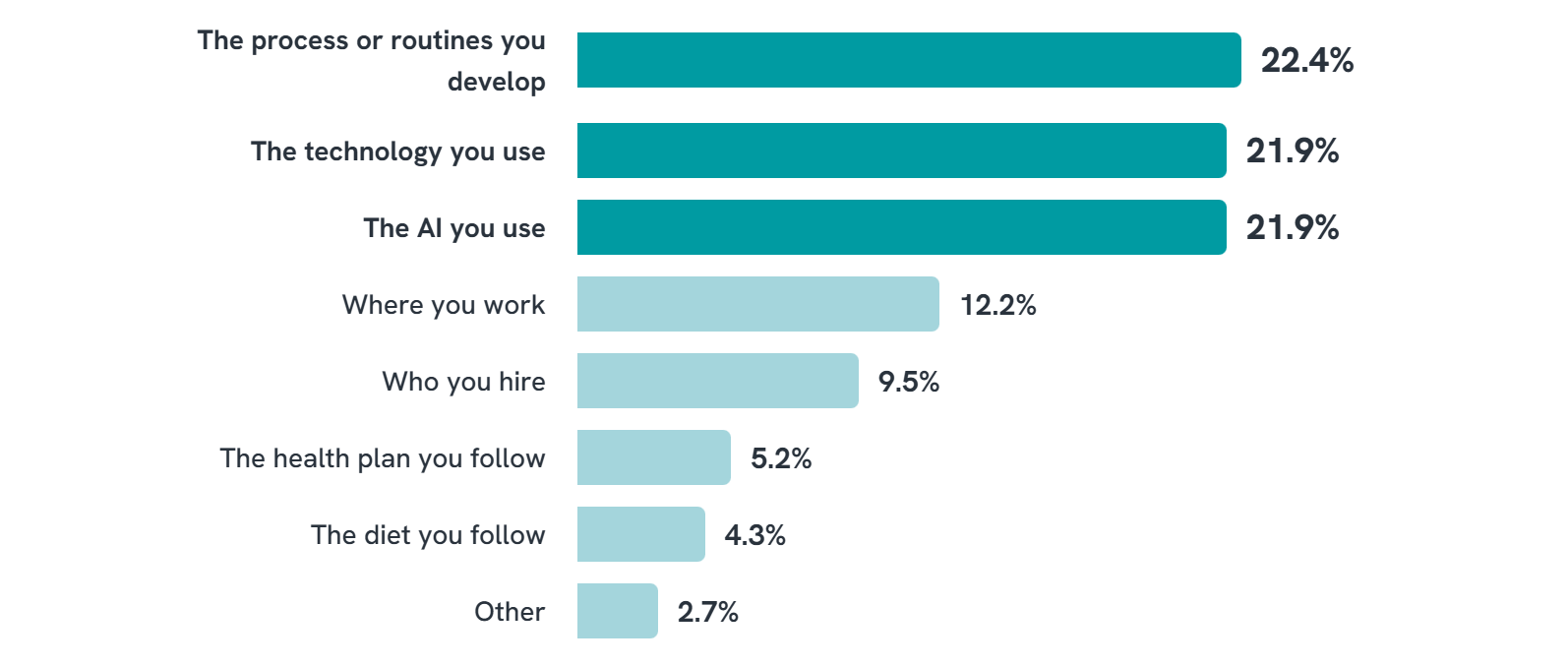
A year ago, leaders were betting on technology. In 2025, 33.86% said the technology they use would have the biggest impact on their productivity. That put it well ahead of process or routines (21.06%) and AI (16.93%).
This year, the three are effectively tied:
-
Process or routines: 22.4%
-
Technology: 21.9%
-
AI: 21.9%
Leaders appear to be spreading their bets more widely and placing less weight on tools as a whole.
One possible reason for the split between technology and AI is that AI features increasingly come built into the software leaders already use. When your CRM, inbox, and project tools all include AI, it gets harder to say where “technology” ends and “AI” begins. (Our survey didn’t test this directly, so treat it as a hypothesis.)
With no single factor leading, leaders seem to see productivity as the result of several levers working together, and process deserves as much attention as technology and AI.
Where do you work?
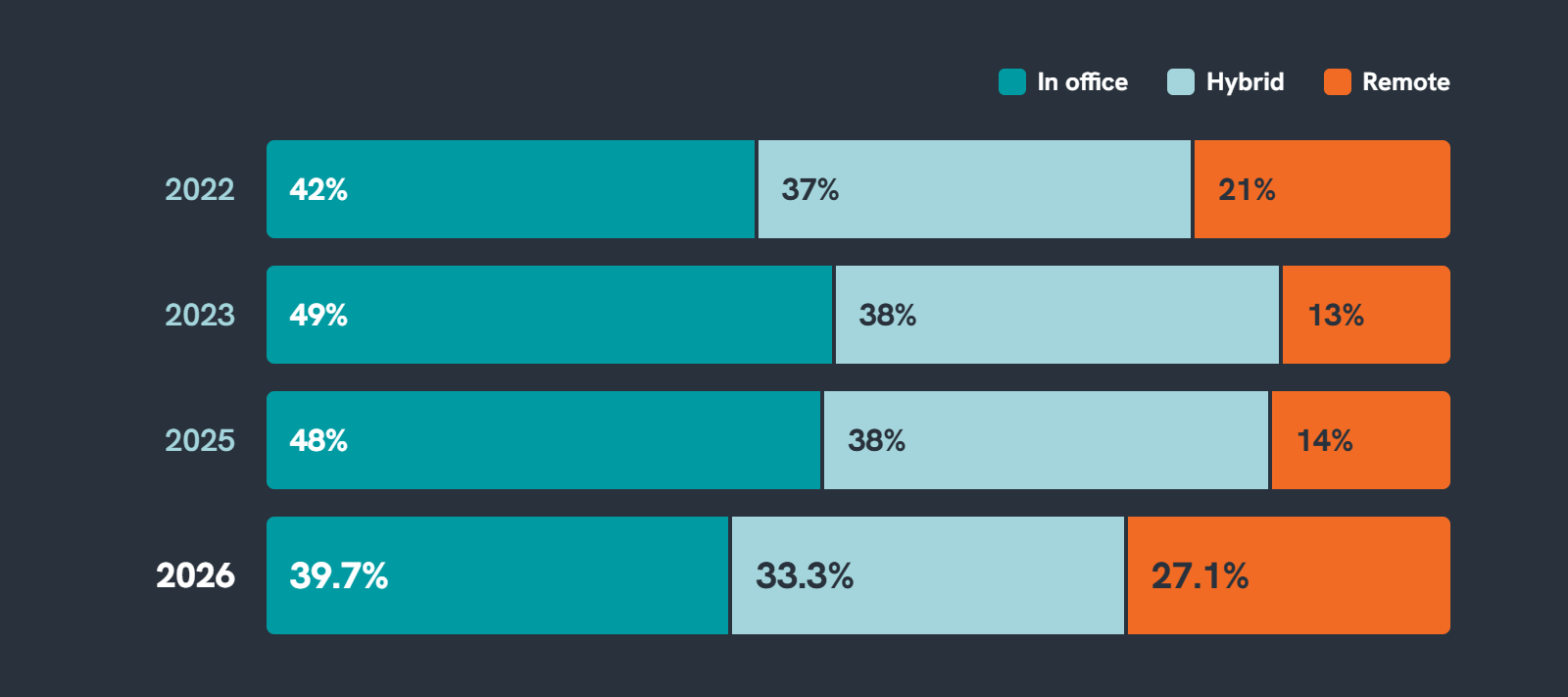
Last year, we described the executive workplace as largely settled. Remote work dropped from its 2022 high, and the office became the default again. This year changed that: fully remote work nearly doubled, while in-office and hybrid work both declined.
Much of that shift probably comes down to who answered. Founders and owners of small companies make their own rules. Without a corporate return-to-office mandate, many choose to work wherever they get the most done.
That sets leaders apart from the people they lead. Across the broader U.S. workforce, Stanford’s WFH Research finds that 62% of full-time employees worked fully onsite over the past year, and only 12% worked fully remote. The office is still the most common workplace for the executives we surveyed, but they are more than twice as likely as the typical employee to work fully remote. For leaders running lean operations, where they work has become one more part of the business they design for themselves.
What percentage of your workday do you feel productive?
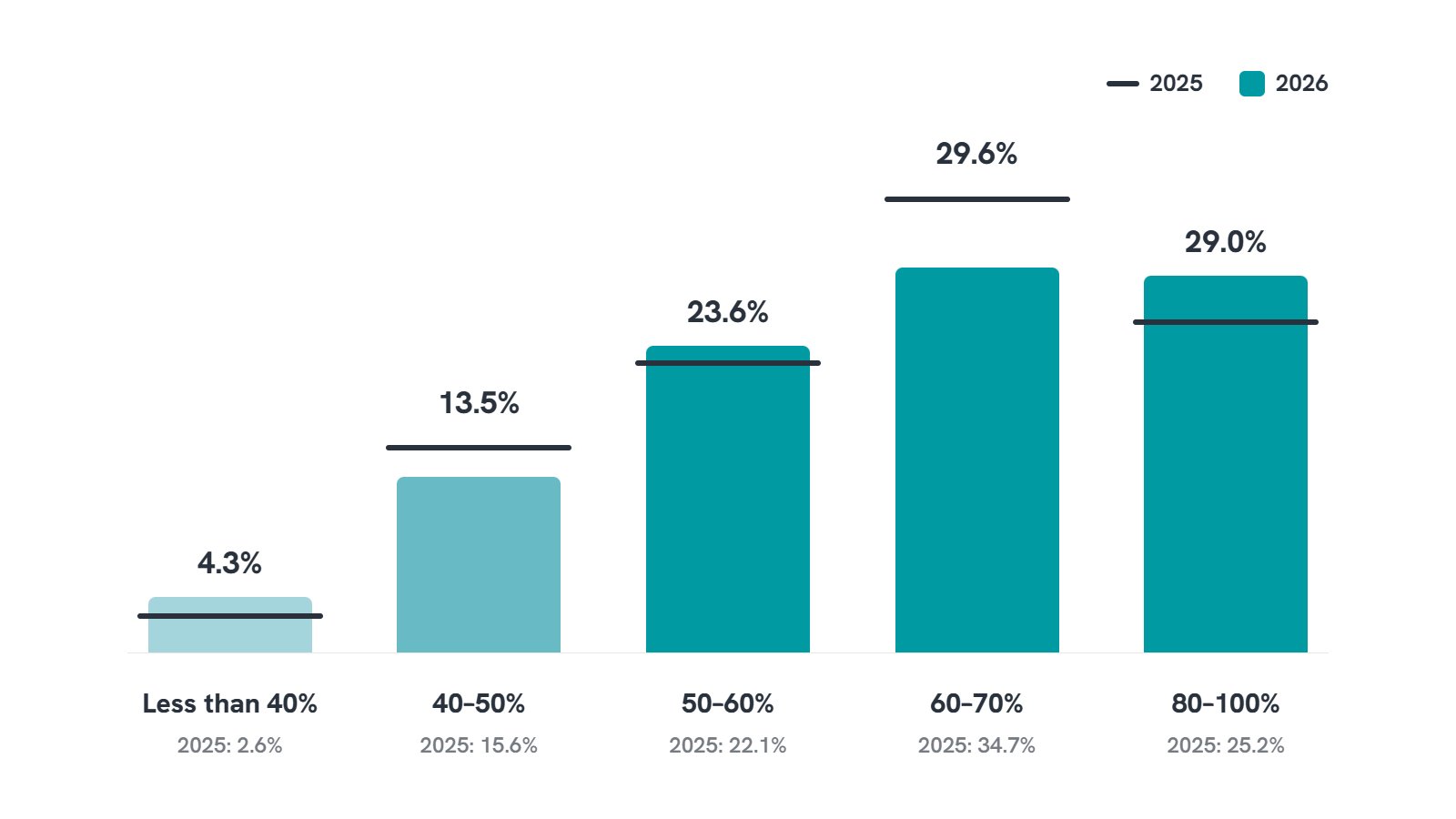
Most leaders still feel productive most of the day. 82.2% say they’re productive more than half the time, almost exactly the same as in 2025 (82.0%). The top of the scale did shift: the 80–100% group grew while the 60–70% group shrank, and the two are now within a point of each other.
In other words, how productive leaders feel day to day hardly changed, even though their tools, systems, and work locations changed a lot. One explanation is that productivity is a moving target. As tools make us faster, our idea of a fully productive day rises with them, and yesterday’s great day becomes today’s baseline.
That would also explain an odd result in this year’s data. Leaders feel about as productive day to day as they did last year, yet fewer say their productivity improved over the past year (54.9%, down from 68%).
How Did Your Productivity in the Last 12 Months compare to the Year Before?
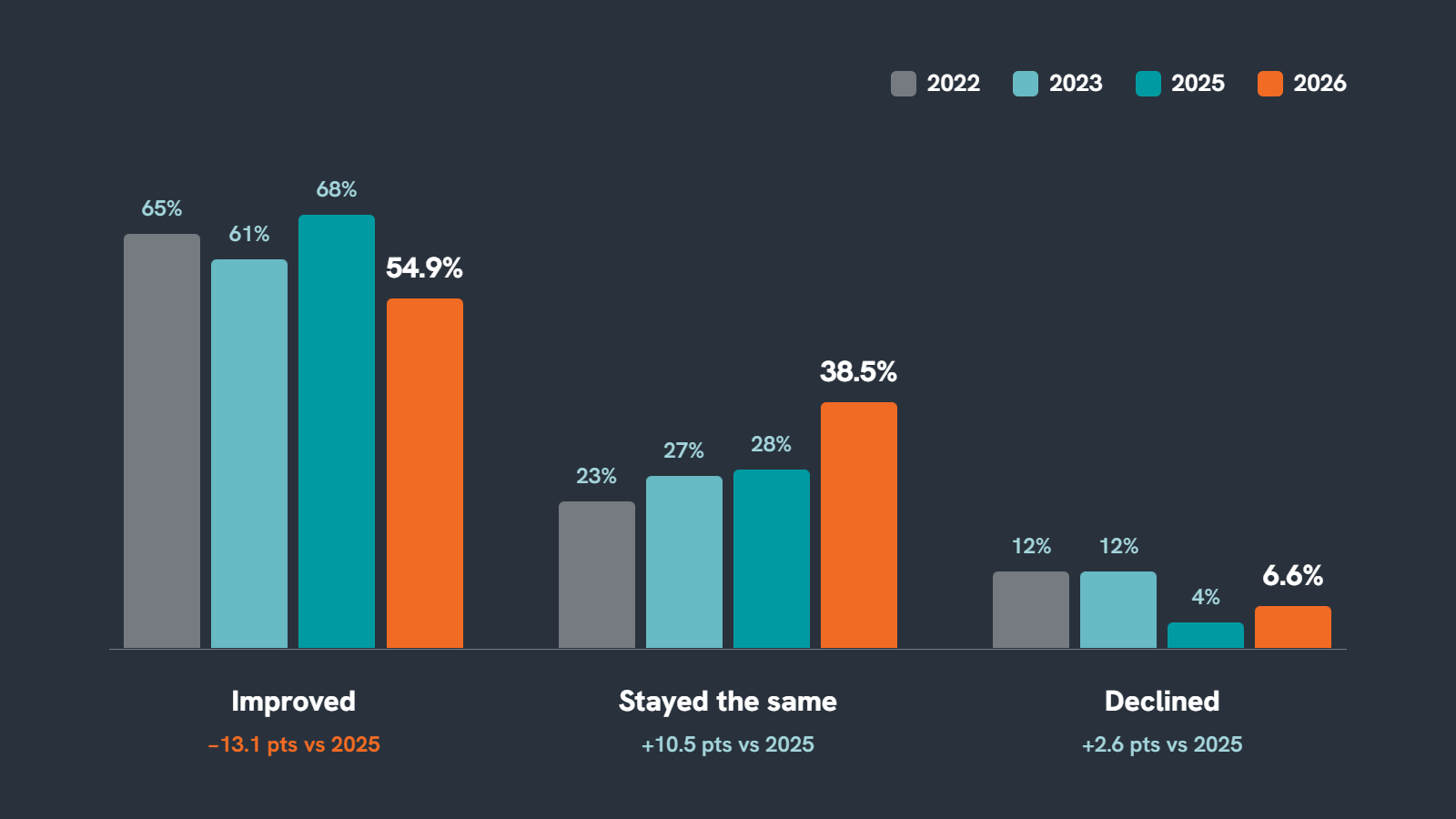
This year, the share of leaders reporting improved productivity was the lowest we’ve recorded. 54.9% said they became more productive, down from a high of 68% in 2025.
Most of that change shifted toward the middle rather than the bottom. A record 38.5% said their productivity held steady. Declines rose slightly to 6.6%, which is still well below the 12% we saw in both 2022 and 2023.
Taken together, 93.4% of leaders either improved or held steady. That’s close to 2025’s 96% and above 2022 and 2023 (88% each). The overall picture is a plateau. After last year’s record gains, holding ground is a solid result. It may also reflect the rising bar we noted above, where yesterday’s gains become today’s baseline.
What are the biggest blockers to your productivity?
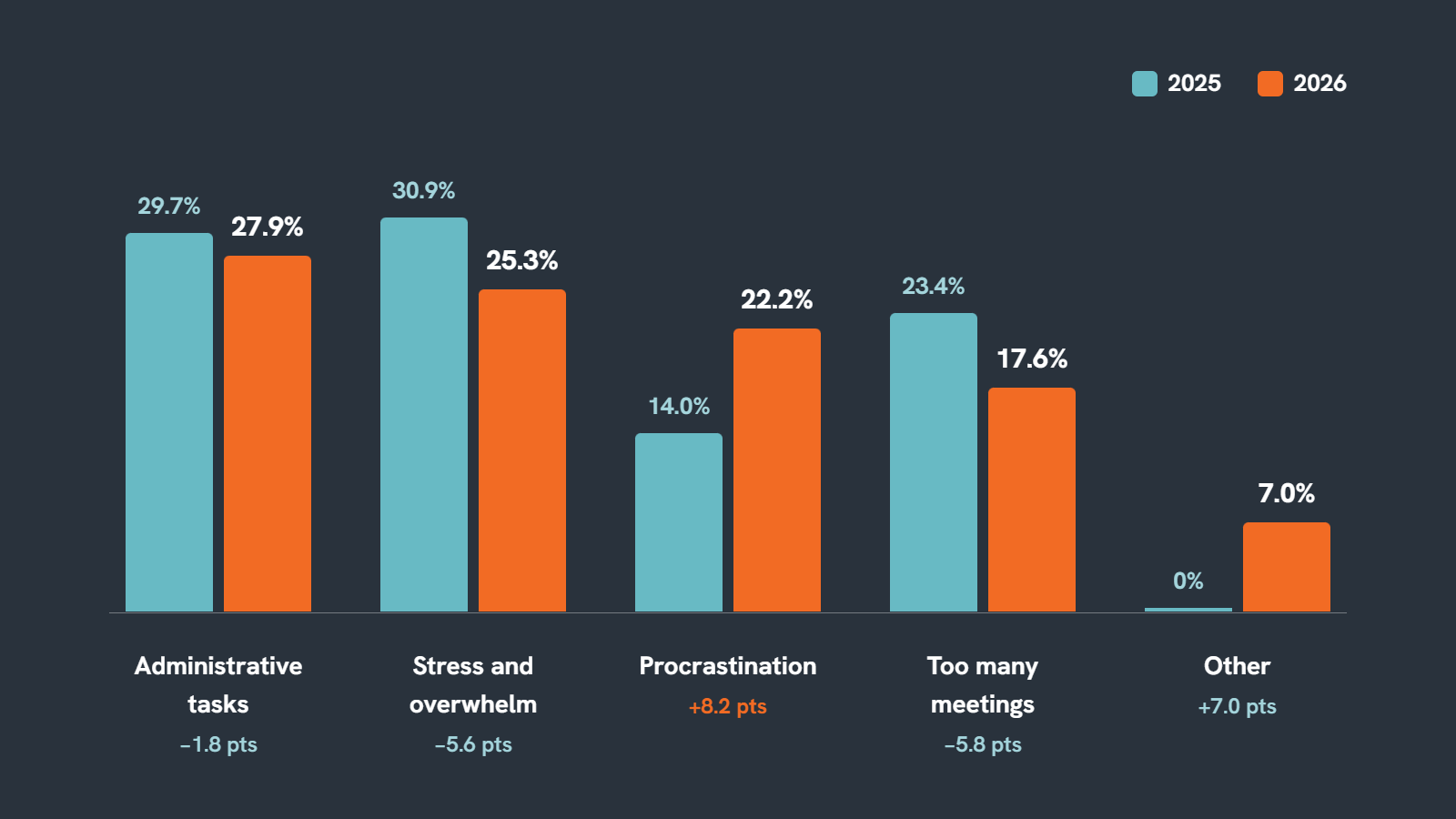
Administrative work has overtaken stress and overwhelm as the top productivity blocker. The ranking changed, but the problem is a familiar one: admin tasks have been among leaders’ top blockers in every recent edition of this report.
The bigger change is procrastination, which rose 8.2 points while stress and meetings both declined. Our survey didn’t ask why, but the timing lines up with a 20-point drop in leaders using a formal productivity system. Methods like GTD and the Pomodoro Technique are designed largely to counter procrastination, so it makes sense that putting things off weighs more heavily as fewer leaders use them.
Admin work feeds the same cycle because it’s easy to postpone, hard to avoid, and quick to pile up. The opportunity is to get low-value work off a leader’s plate before it accumulates.
How do you describe your current relationship with your workload?
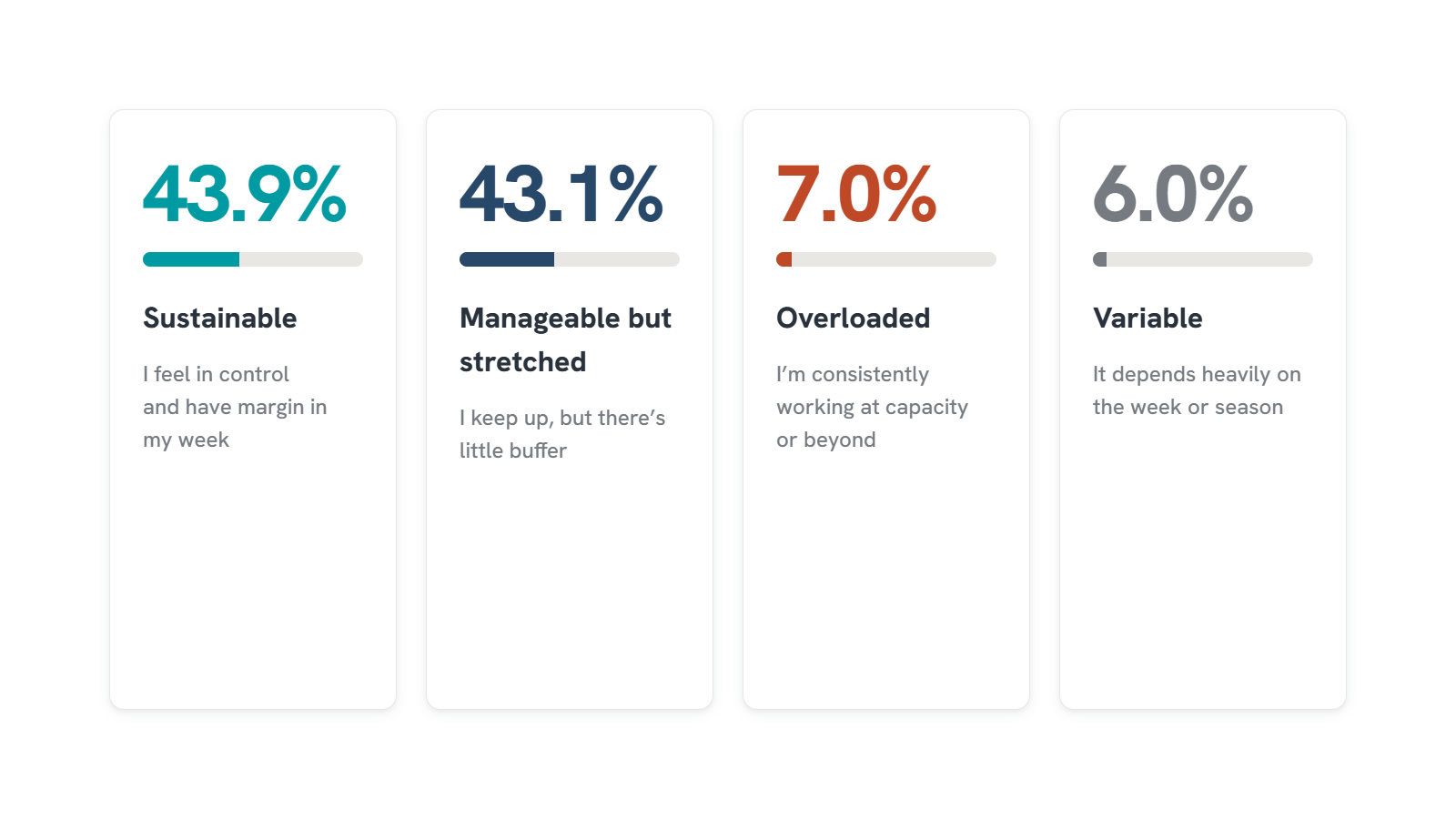
87% describe their workload as sustainable or manageable, and only 7% say they’re overloaded.
Most leaders are keeping up with their workload. But keeping up isn’t the same as having room to breathe. The two largest groups are nearly equal, meaning fewer than half of leaders (43.9%) have real margin in their week. If you add the overloaded leaders, just over half are working with little or no buffer.
That fits this year’s theme of recalibration. Leaders aren’t in crisis, but many are running close to capacity. Since administrative tasks are now the top productivity blocker, that missing buffer is often where low-value work piles up.
How much uninterrupted, focused work time do you get in a typical day?
Most leaders get little uninterrupted time to focus. Only 28.4% have half or more of their day free for focused work, while just over half (52%) get less than 40%.
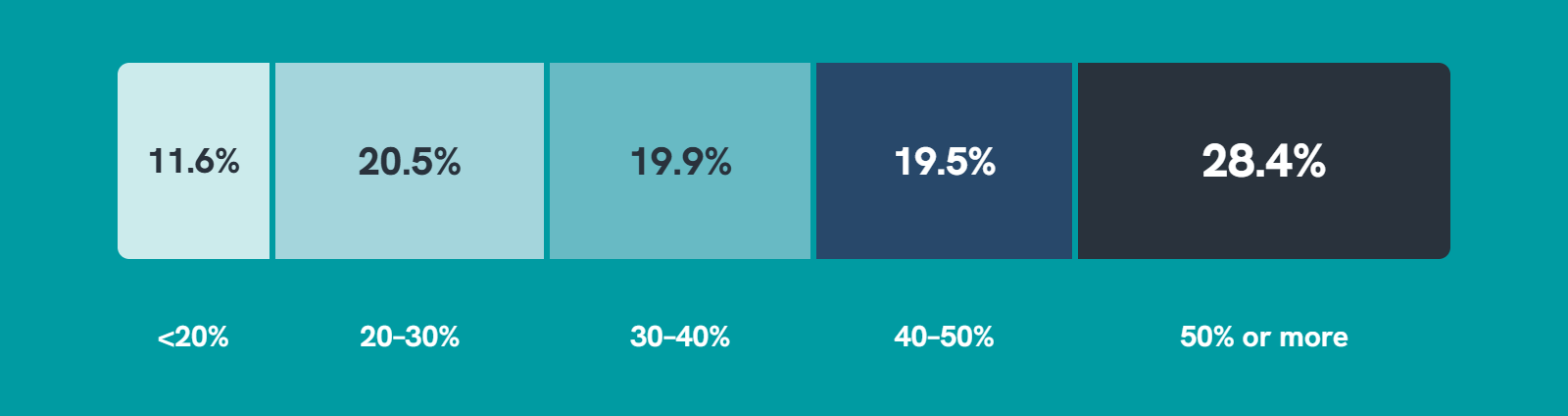
That matters because an interruption costs more than the moment it takes. Gloria Mark, professor emerita of informatics at UC Irvine, has found that people now stay on a single screen for about 47 seconds on average before switching, and that recovering from an interruption can take almost half an hour.
Even so, leaders still feel productive. Fewer than three in ten get substantial focus time, yet 82.2% say they’re productive for more than half their day. Much of a leader’s work happens between stretches of deep work, in decisions, conversations, and quick calls. The open question is how much more they could get done with fewer interruptions.
How much of your meeting time would you describe as genuinely productive?
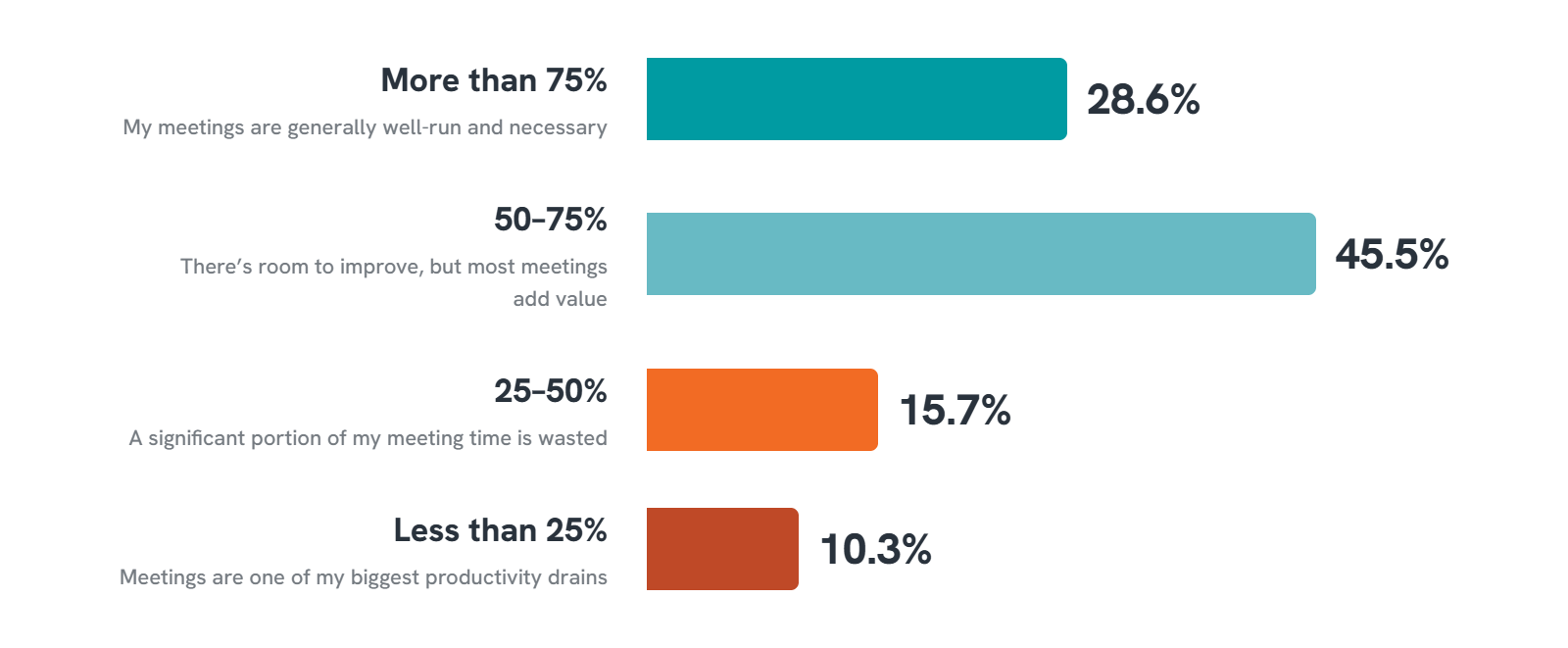
Most leaders find their meetings worthwhile. About three in four (74.1%) say at least half of their meeting time is productive. That fits with this year’s drop in “too many meetings” as a productivity blocker.
Still, about a quarter of leaders say half or more of their meeting time is wasted. Even productive meetings carry a hidden cost because of when they happen. Microsoft’s Work Trend Index found that half of all meetings happen between 9 and 11 a.m. and 1 and 3 p.m., when many people reach their natural productivity peaks. Even a good meeting held during your sharpest hours can still eat into the focus time leaders already say they lack.
People Challenges
Productivity rests on three factors: the people you work with, the processes you follow, and the technology you use. We start with people because no tool can fix the wrong team.
Talent is still the biggest hurdle. Nearly half of leaders (47.2%) say finding people with the right skills is their top hiring challenge, just as it was in 2025. The stakes go beyond headcount. The right people determine how much a leader can delegate, how many hours they spend on work they shouldn’t be doing, and how well the team performs when they’re not in the room.
Below, we look at how leaders are building their teams, how much work they hand off to outside partners, and how they use executive assistants.
Building a Productive Workforce
What are your biggest hiring challenges?
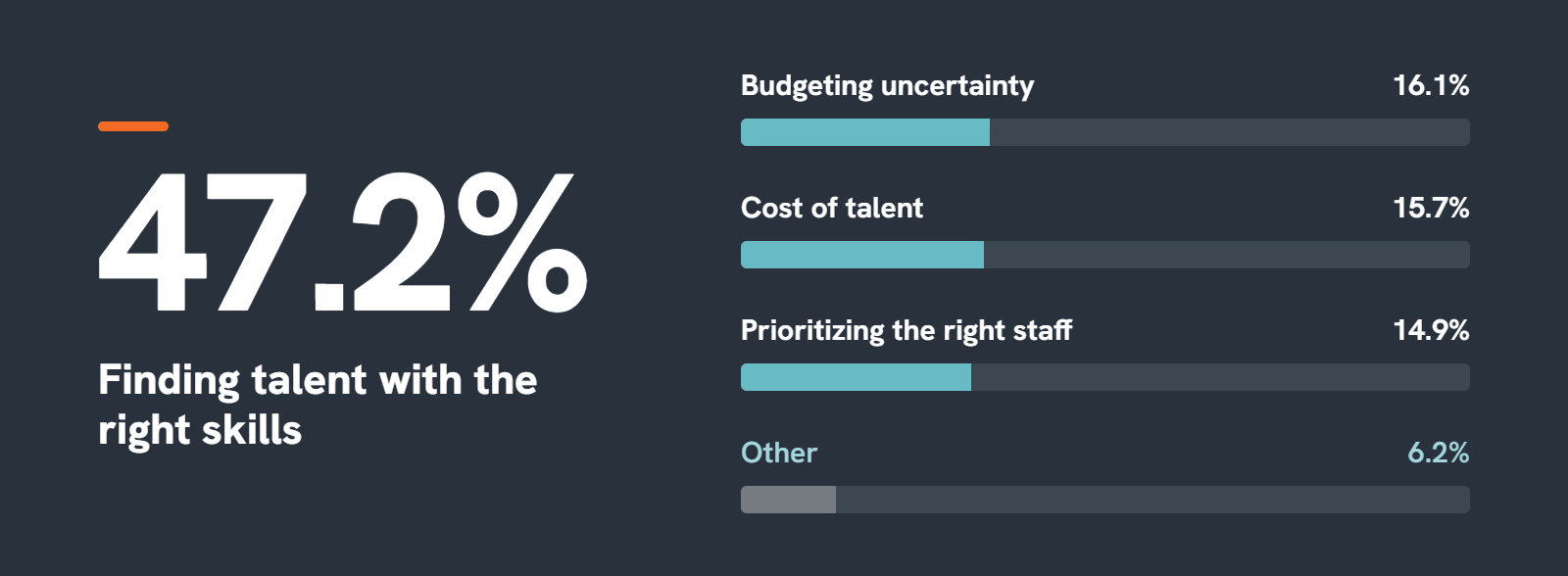
The skills gap is in a category of its own. Cost of talent, budgeting uncertainty, and prioritizing the right roles each come in at around 15% among leaders. They cited finding talent with the right skills nearly three times as often as any of them.
Money still matters. Cost and budget concerns together make up about a third of responses (31.8%). But for most leaders, the harder problem is finding the right person in the first place. That may be why so many are looking beyond traditional hiring.
Outsourcing
How much of your workforce is contract, freelance, or outsourced?
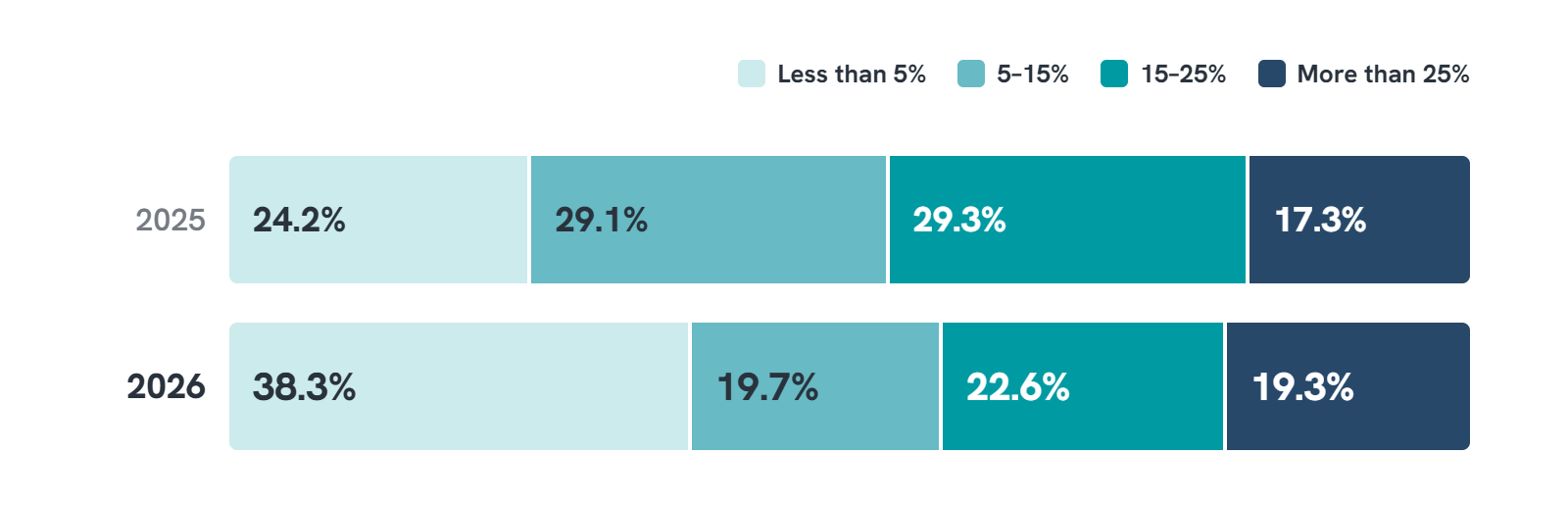
Leaders are picking sides on outsourcing. The middle of the range shrank sharply while both ends grew. The share of leaders outsourcing less than 5% of their workforce jumped 14 points, and the share outsourcing more than 25% rose by 2 points.
Instead of using a bit of both, more leaders seem to be committing to one model: build in-house, or lean heavily on outside support. This year’s sample likely accounts for part of the jump at the low end. On a team of 10 or fewer, “less than 5%” effectively means outsourcing no one. That means this group probably includes many small businesses with no outside support at all.
What do you outsource?
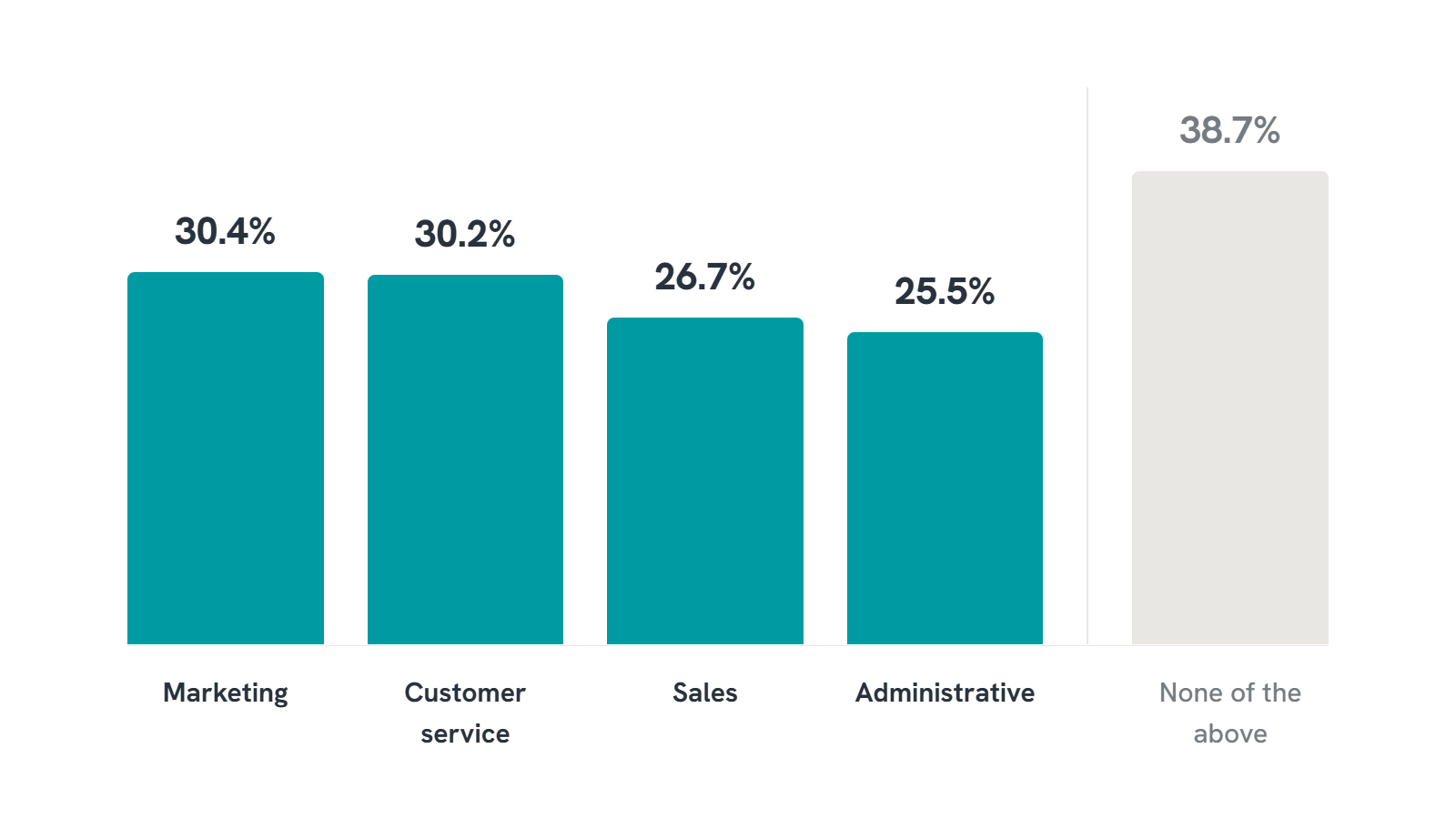
Marketing and customer service are the most commonly outsourced functions, followed by sales and administrative work. One in four leaders (25.5%) outsource at least some admin work, even though most leaders’ assistants still work in the office.
Working With an Assistant
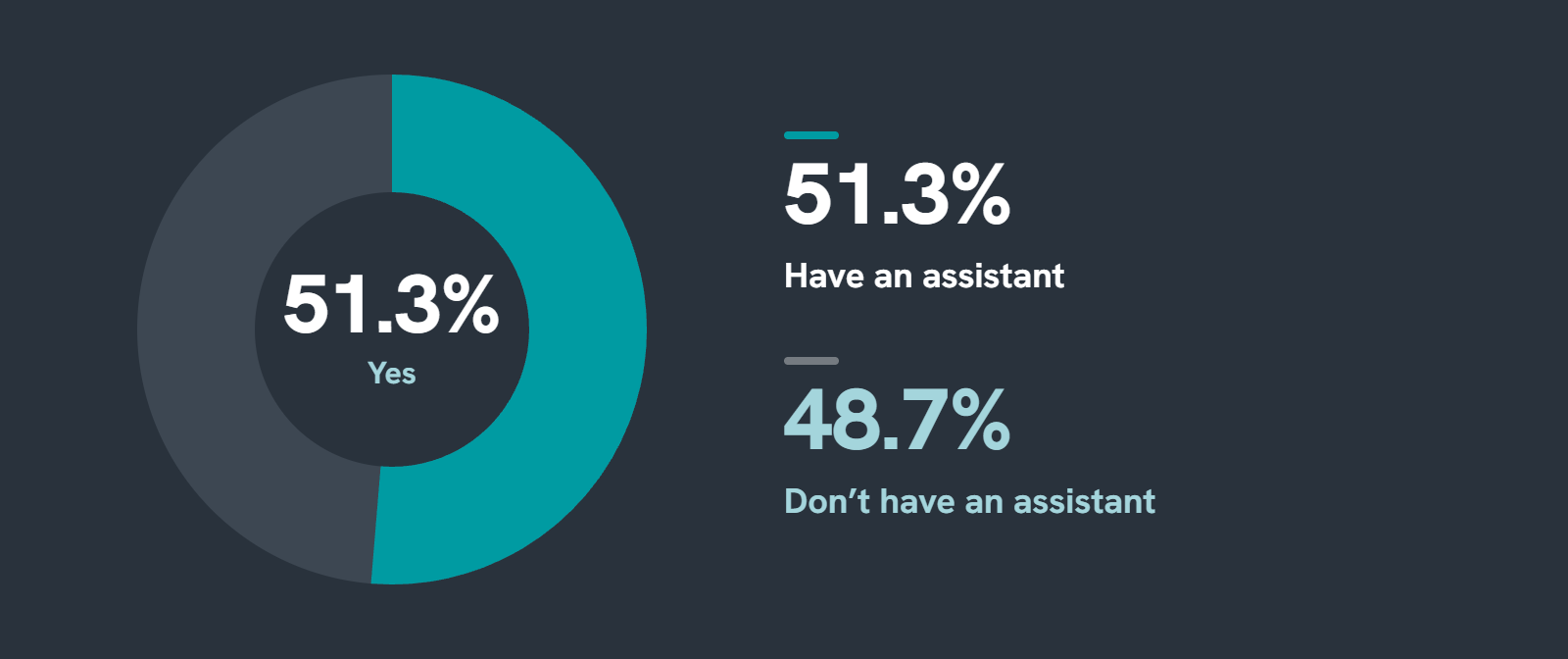
Just over half of leaders (51.3%) work with an administrative or executive assistant, down from 72% in 2025.
This year’s sample likely accounts for much of the drop. Last year, founders and small business owners were much less likely to have formal assistant support and often relied on personal contacts instead. With nearly half of this year’s respondents in that group, we'd expect a lower overall rate.
That still leaves nearly half of leaders handling their own admin, in the same year that administrative tasks became their top productivity blocker.
Do you have an admin or executive assistant?
What does your assistant do for you?
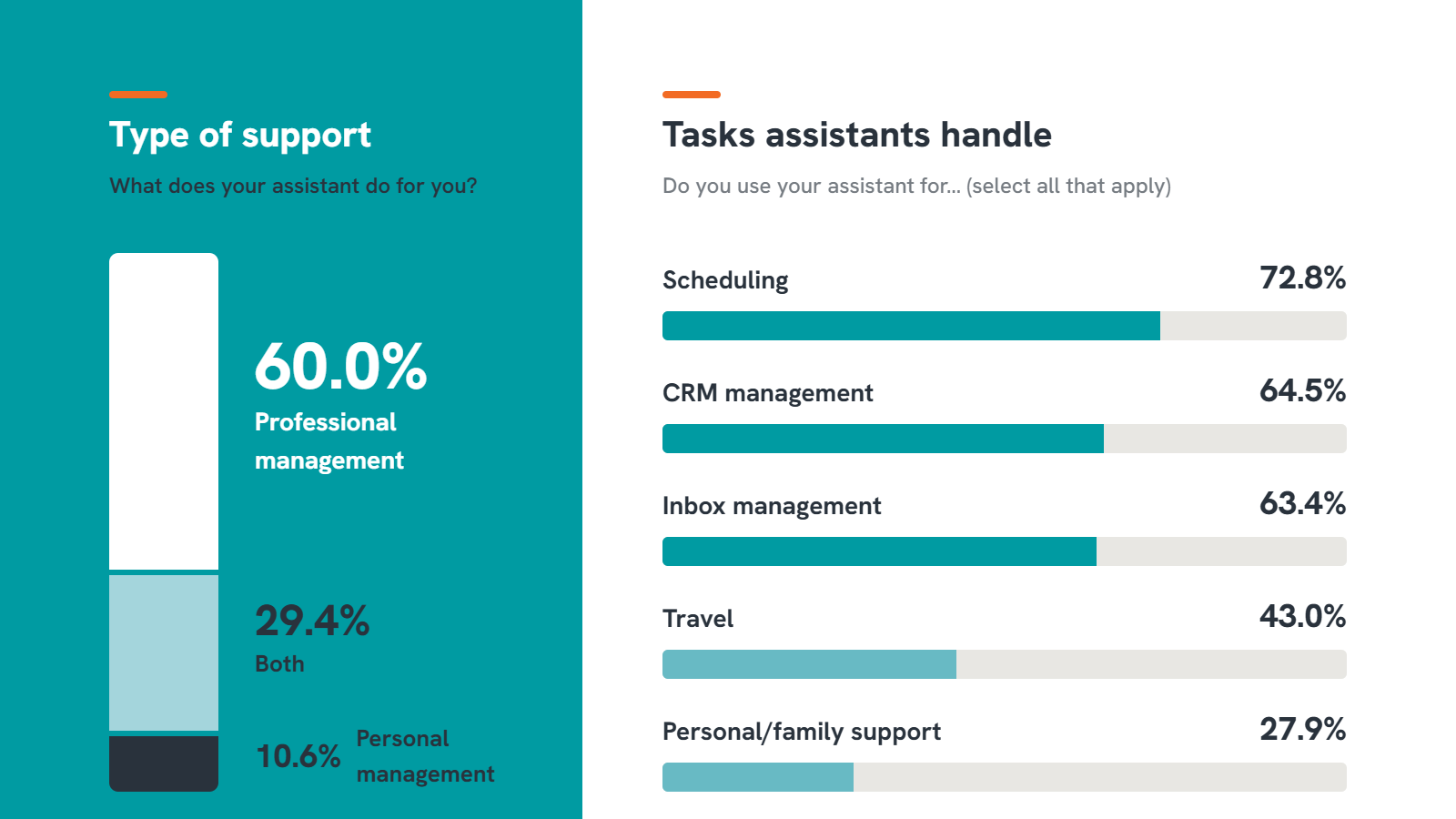
How leaders use their assistants has barely changed since last year. Most (60%) still rely on their assistant for professional work only, and the split between professional, personal, and both moved by about a point.
At the task level, core admin work still leads: scheduling, CRM management, and inbox management. Personal and family support is the least common use, but it was the one category that grew, rising from 25.3% to 27.9%.
That gap is worth a closer look. Last year, we pointed to an opportunity for leaders to expand their assistant’s role into personal tasks. Progress is slow, but the reasoning still holds. Personal logistics don’t stop at 5 p.m., and handing them off frees up energy for the work only a leader can do.
How long have you had an assistant?
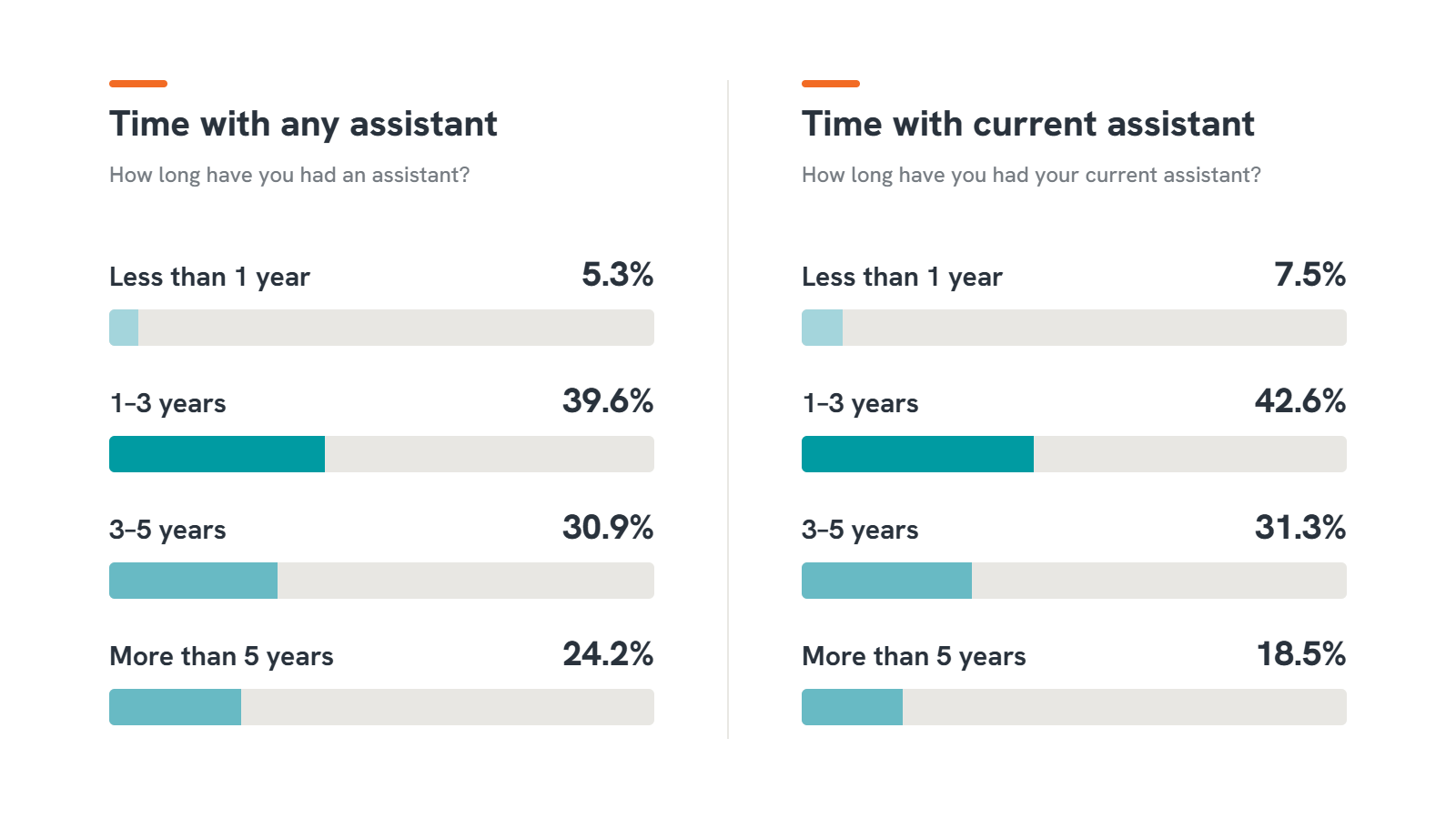
Leaders who find good support tend to keep it. More than nine in ten (92.5%) have worked with their current assistant for at least a year, and nearly half (49.8%) for three years or more.
Comparing the two charts also shows what happens when one of those relationships ends. About a quarter of leaders have had an assistant for more than five years, but fewer than one in five have had the same assistant that long. For a noticeable share of long-time assistant users, that means starting over with someone new at least once.
That fits with this year’s hiring data. When finding skilled talent is the biggest hiring challenge, leaders have every reason to hold on to the right assistant.
How'd you find your assistant?
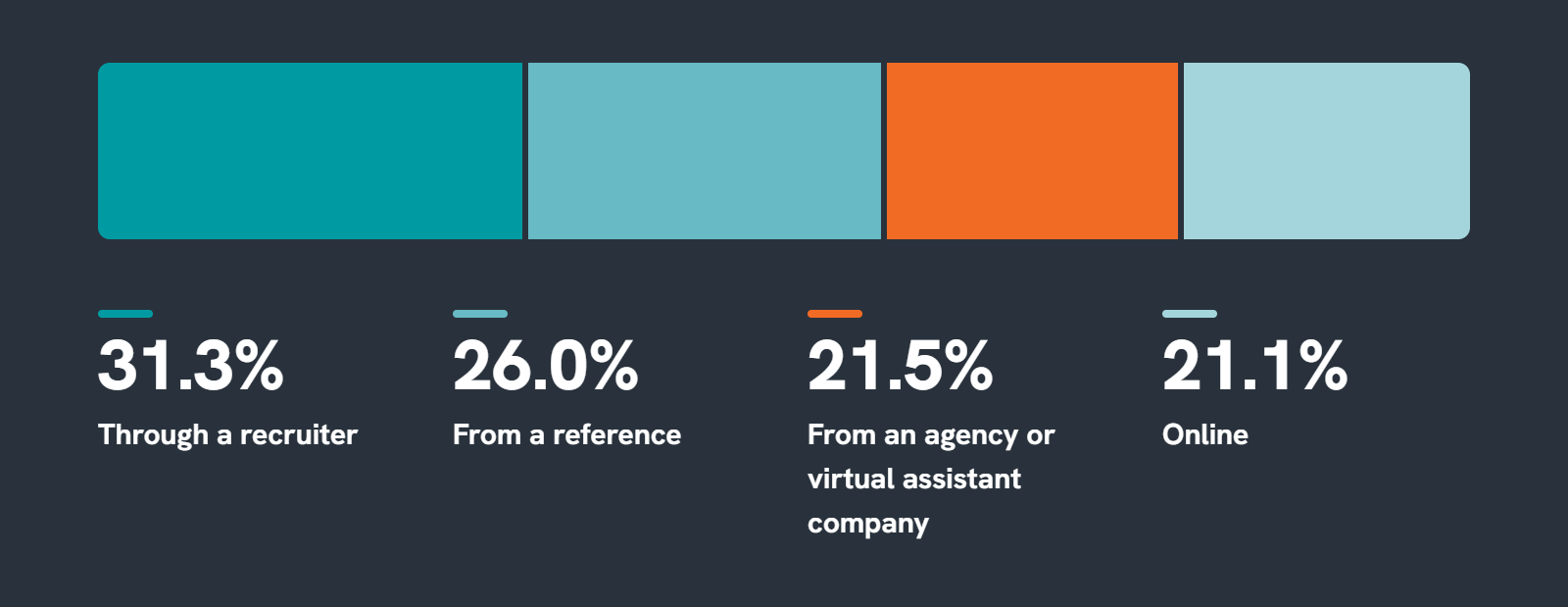
Recruiters are now the most common way leaders find an assistant. That’s a change from last year, when personal references led, and recruiters ranked third.
The broader pattern is that leaders want someone else to do the vetting. More than three in four (78.8%) found their assistant through a recruiter, a reference, or an agency or virtual assistant company, all channels where candidates come pre-screened. Only about one in five searched online on their own.
This lines up with the skills gap. When the right talent is hard to find, it makes sense to rely on people and partners who already know what good looks like.
What software tools does your assistant use?
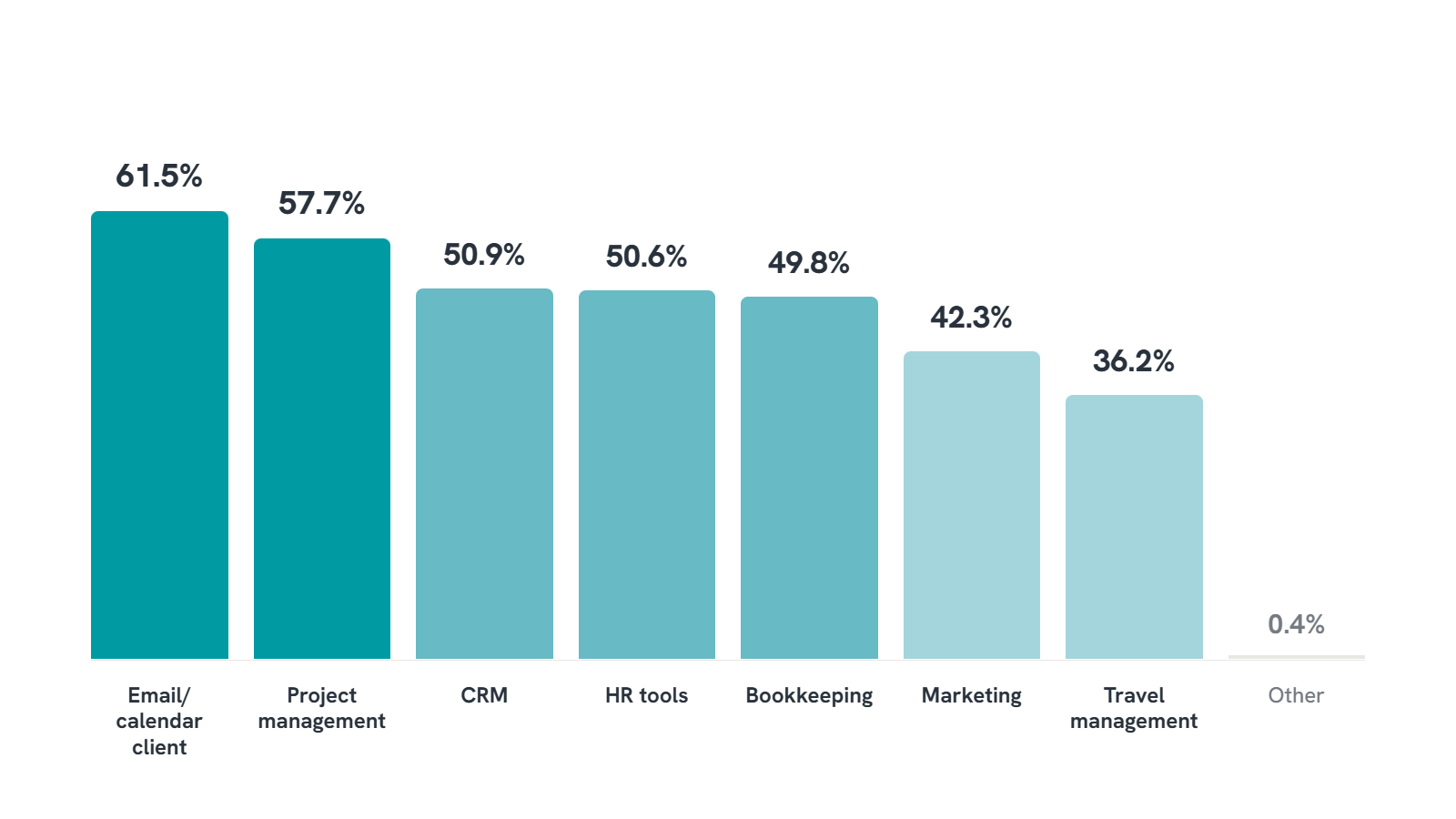
Assistants still work inside the same systems as the leaders they support. Email and calendar clients and project management software remain the most common tools, as they were last year.
The mix of tools has shifted, though. CRM use dropped the most, from about 65% to 50.9%. Project management, travel, and HR tools each fell by five to seven points. Bookkeeping and marketing software were the only categories to grow.
That pattern fits this year’s sample. At smaller, owner-led companies, an assistant often works as a generalist, handling the books, the marketing calendar, and the inbox. These assistants may cover a wider range of business functions with a leaner set of tools, matching the smaller tech stacks we saw among leaders.
Process Challenges
Leaders put a lot of stock in process. When we asked what will have the biggest impact on their productivity this year, “the process or routines you develop” was the most common answer (22.4%), narrowly ahead of technology and AI.
Yet most leaders (56.7%) don’t follow a formal productivity system. For many, process feels more personal: routines and ways of working they’ve built for themselves rather than adopted from a book.
This section looks at how leaders delegate, which systems they use, and which personal practices they credit.
Delegating
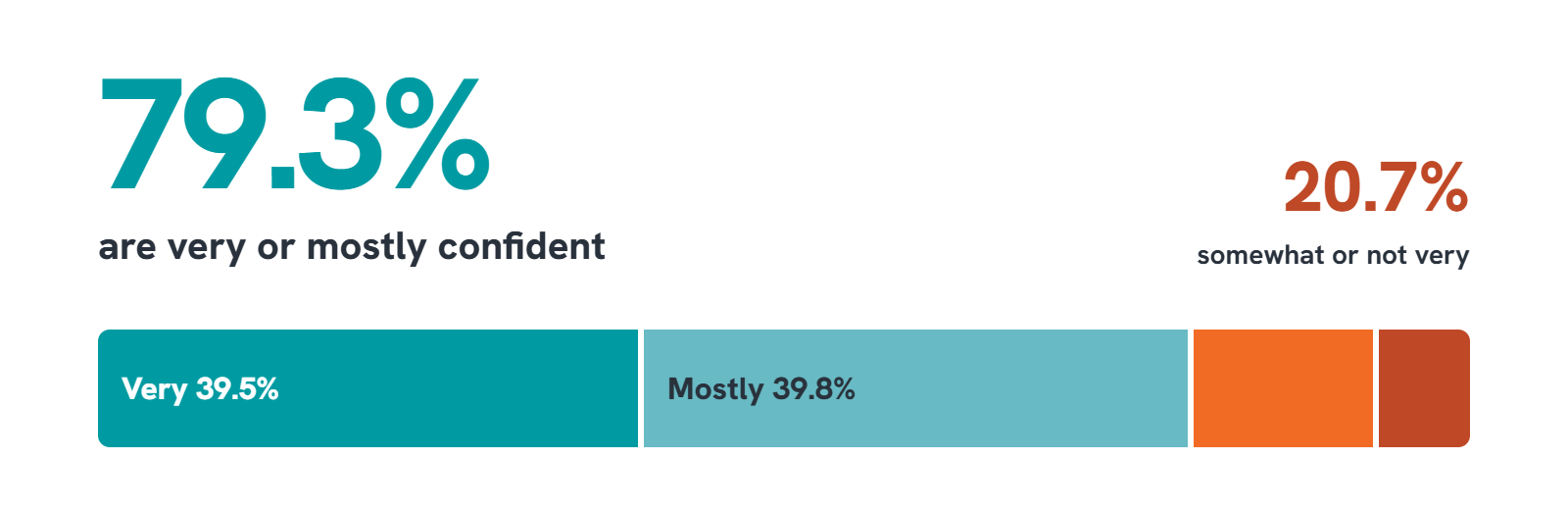
Leaders trust their teams. Nearly four in five (79.3%) are very or mostly confident their team can execute without their direct involvement. Only 7% say execution depends heavily on their presence.
How confident are you in your team's ability to execute without your direct involvement?
Clear roles likely help. 94.1% say the responsibilities of the people who support them are clearly or mostly clearly defined. Just 5.8% report regular confusion, overlap, or responsibilities that shift frequently.
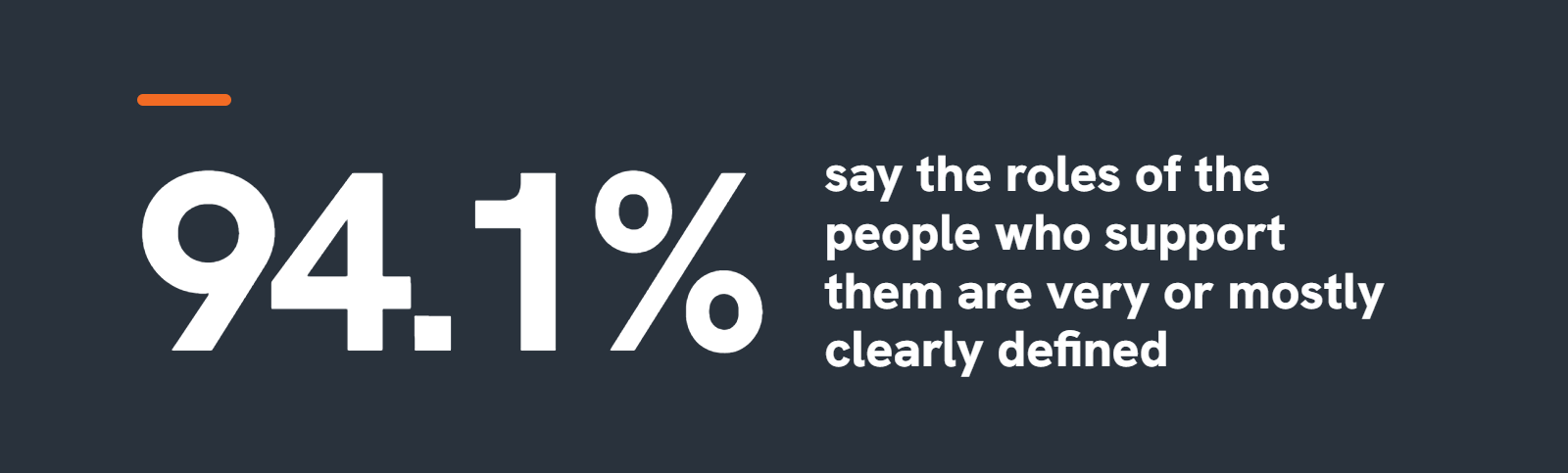
How Clearly Defined Are the Roles and Responsibilities of the People Who Support You?
-
60.3% Very clearly defined: everyone knows what they own and what they don’t
-
33.8% Mostly clear: there’s some ambiguity, but it rarely causes problems
-
4.4% Somewhat unclear: overlap and confusion come up regularly
-
1.4% Very unclear: roles are ad hoc, and responsibilities shift frequently
Most leaders already have the basics of good delegation in place: clear roles and capable teams. As our hiring data shows, the harder part is finding people with the skills to take on more ownership.
That gap shows up in leaders’ own workloads. Last year, more than half of executives told us they spend 30% or more of their day on busywork. This year, administrative tasks rank as their top productivity blocker, and nearly half of leaders don’t have an assistant. The structure for delegation exists. For many leaders, what’s missing is someone to hand the work to.
Productivity Systems
Do you adhere to productivity systems like Getting Things Done (GTD), Franklin Covey, or the Pomodoro method?
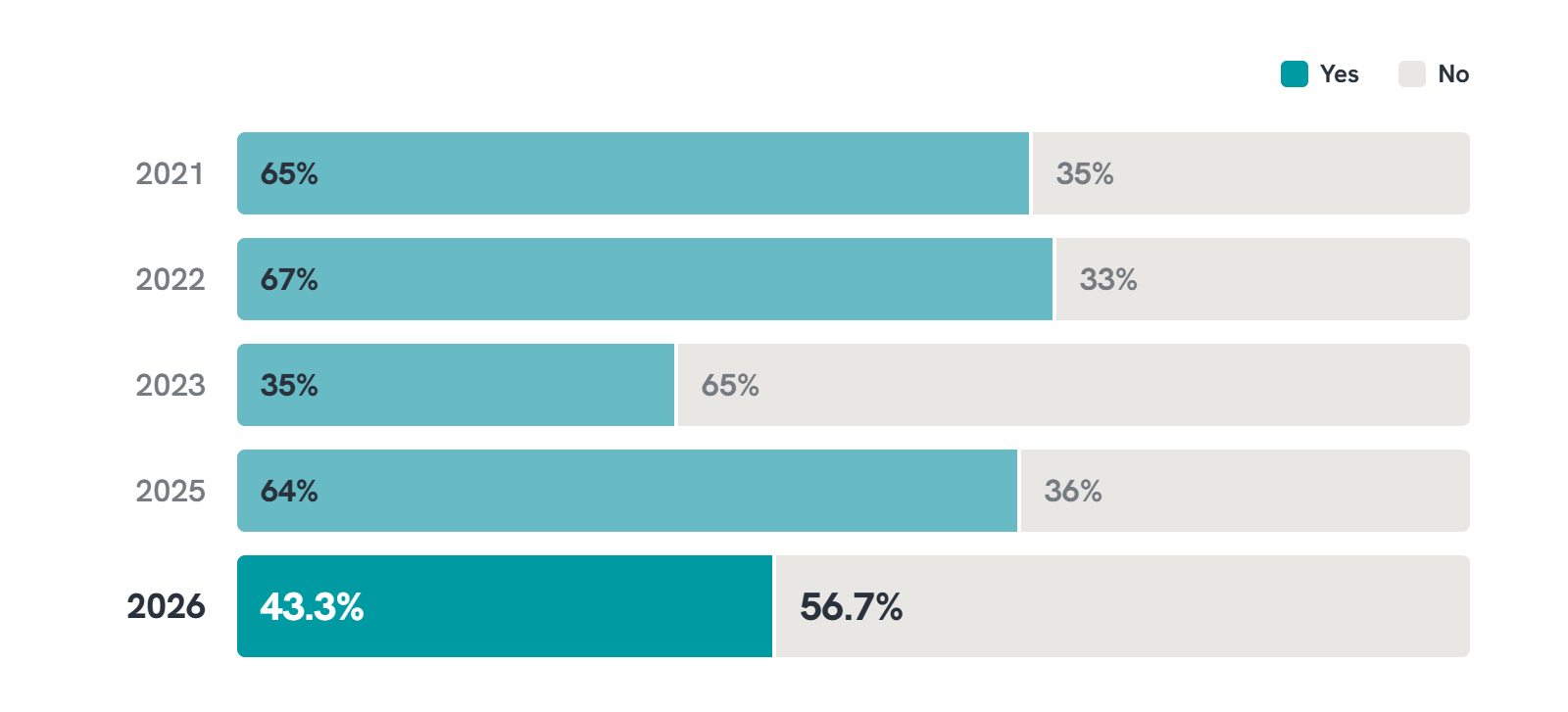
Formal productivity systems have had an uneven history with leaders, and 2026 was another down year. Use fell 20.7 points from 2025, though it remains above the 2023 low.
Several factors may be behind the drop. Unlike last year, this year’s question named specific frameworks, which may have narrowed what respondents counted as a “system.” Our sample also leans toward founders of small companies, who may be less likely to adopt formal methods.
AI may also be taking over some of what these frameworks used to do. When a tool can summarize priorities, draft a plan, or organize a calendar, some leaders may no longer need a named method to structure their day. Our survey can’t confirm which of these factors matters most.
Do you use an app or other tools to manage your productivity?
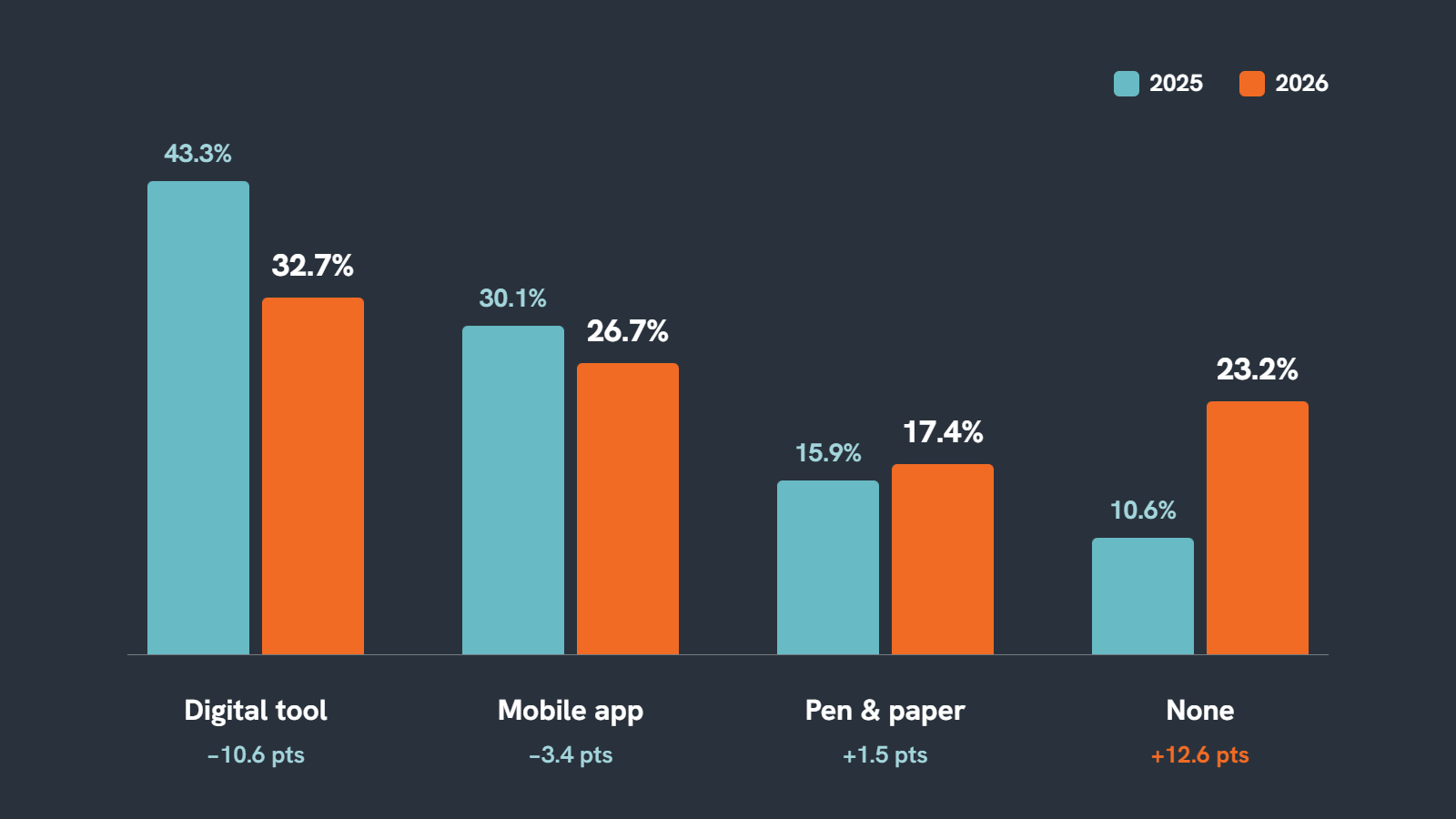
More leaders are going without productivity tools entirely. The share using none more than doubled, from 10.6% to 23.2%, while use of digital tools and mobile apps both declined.
Among leaders who do use tools, digital options still lead, though by a smaller margin.
Most leaders still use something. Even with formal system use down, more than three in four (76.8%) rely on an app, a digital tool, or pen and paper to manage their work. With or without a named method, most leaders still want a place to keep track of their work.
Of the 43% of participants who indicated that they use a productivity system, here's what they use:
Which productivity systems do you use?
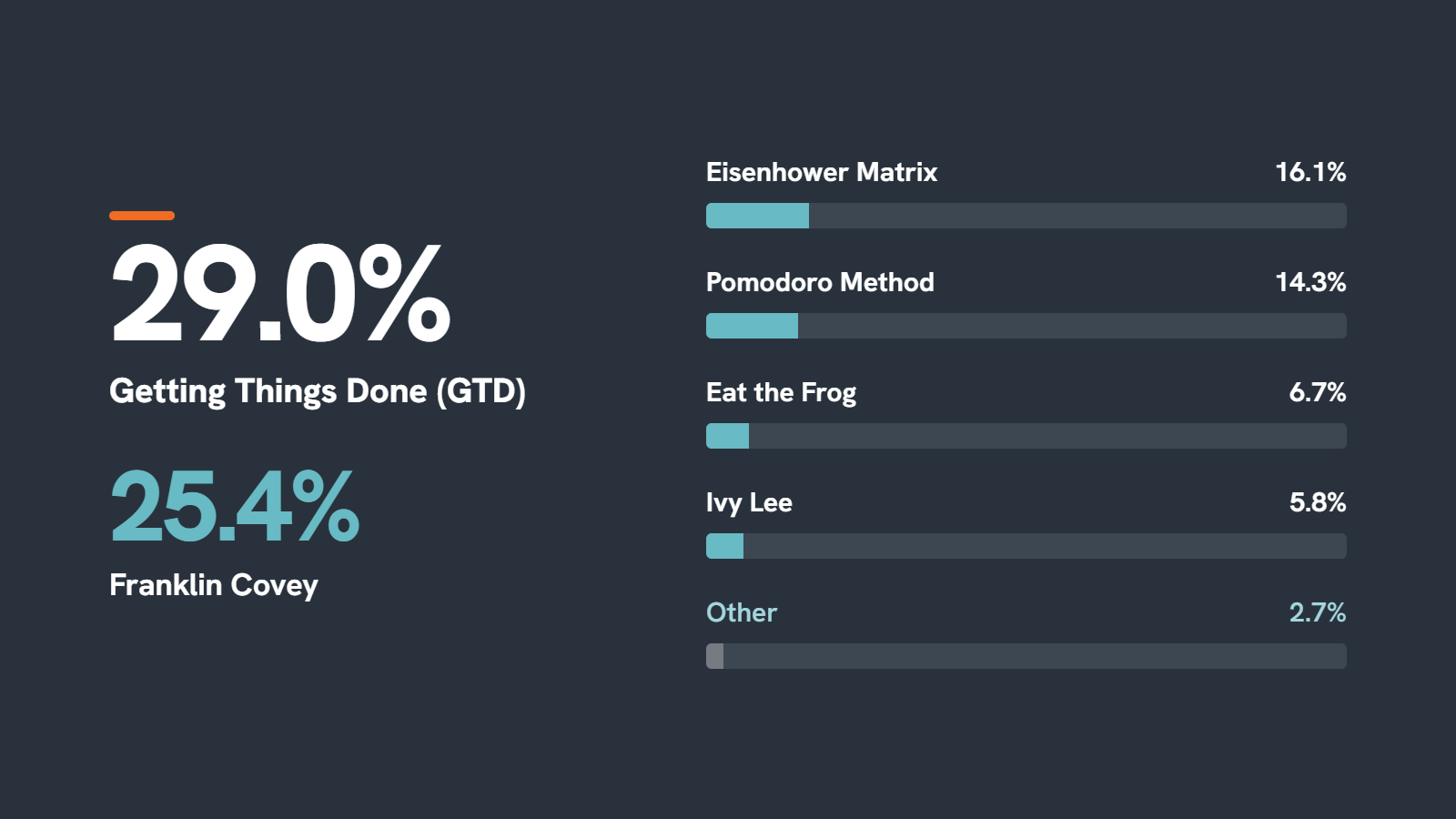
Last year, no single productivity system stood out. This year, among leaders who follow a formal system, Getting Things Done (GTD) is the most popular single choice (29.0%), with Franklin Covey close behind (25.4%).
Prioritization frameworks carry even more weight than that suggests. Counting the 16.1% who chose the Eisenhower Matrix, Covey-style prioritization accounts for 41.5% of system users, more than any single method. Time-focused methods like the Pomodoro Technique, Eat the Frog, and the Ivy Lee Method rank lower.
The most popular systems have something in common: they help leaders decide what matters before deciding how to spend their time.
Personal Systems
Which personal practices most meaningfully impact your productivity?
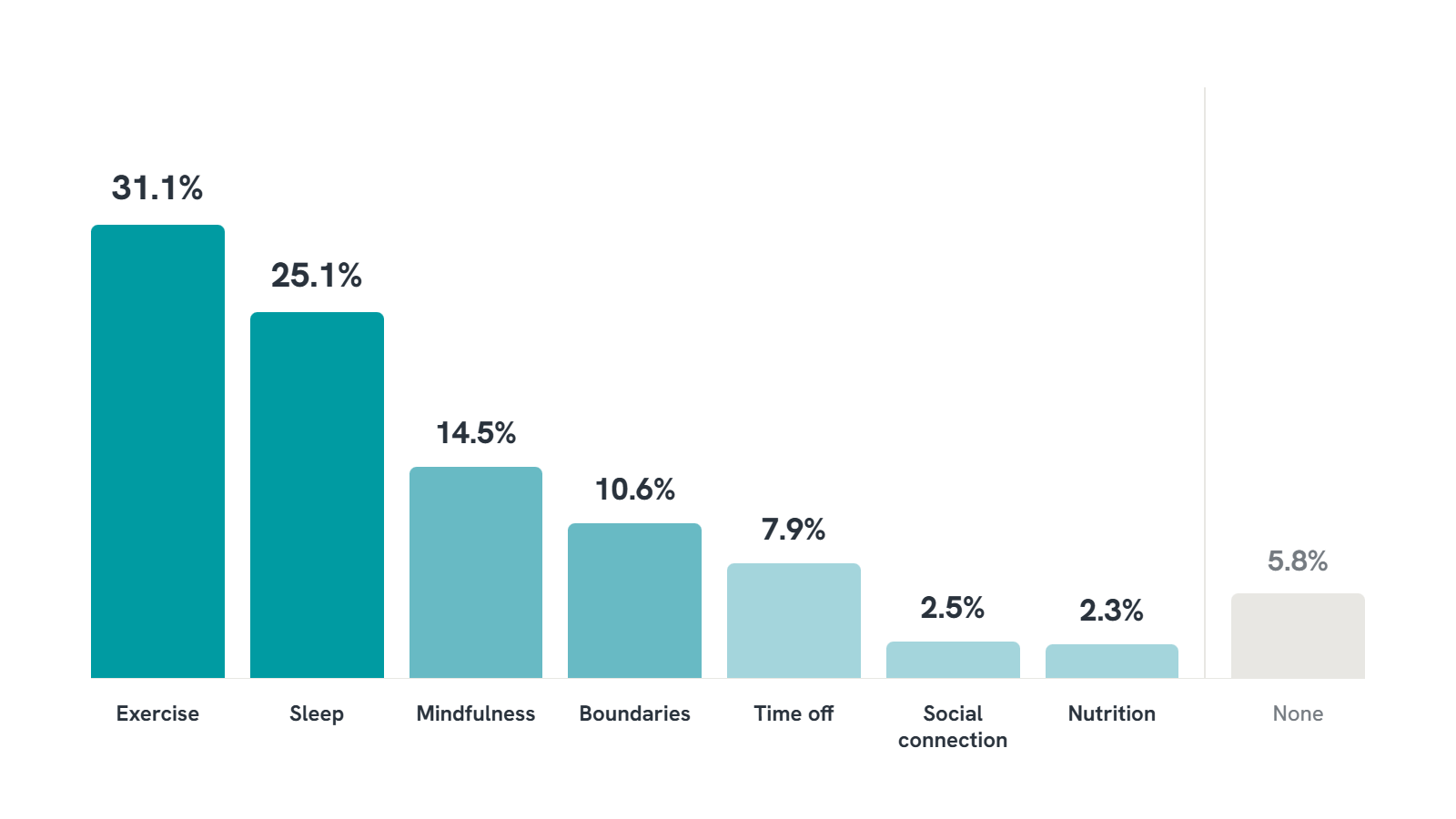
For most leaders, productivity extends beyond the workday. Only 5.8% say they focus on systems rather than personal habits.
Leaders most often credit physical basics. Regular exercise (31.1%) and sleep discipline (25.1%) together make up more than half of responses. Mindfulness or reflection comes next, at 14.5%.
Habits built around disconnecting rank lower. Boundaries around work hours or device use (10.6%) and regular time off (7.9%) together account for fewer than one in five responses. That stands out as work increasingly reaches into evenings and weekends. It may also show how hard it is to truly disconnect. For most leaders, a workout or a full night’s sleep resets them more often than a day off.
Technology Challenges
Technology is the third pillar of productivity, and leaders rank it almost even with process. Most are happy with their tools. 74.3% say the software they use makes their lives easier, up slightly from 2025. 78.5% are at least somewhat satisfied with how their organization rolls out new technology.
The friction is in the noise. More than seven in ten leaders (71%) feel overwhelmed by notifications, messages, and alerts at least some of the time, and 21.7% say it happens frequently.
Leaders are responding by being more selective. As the sections below show, they’re using fewer tools, choosing them more deliberately, and holding AI to a higher standard.
Productivity Technology
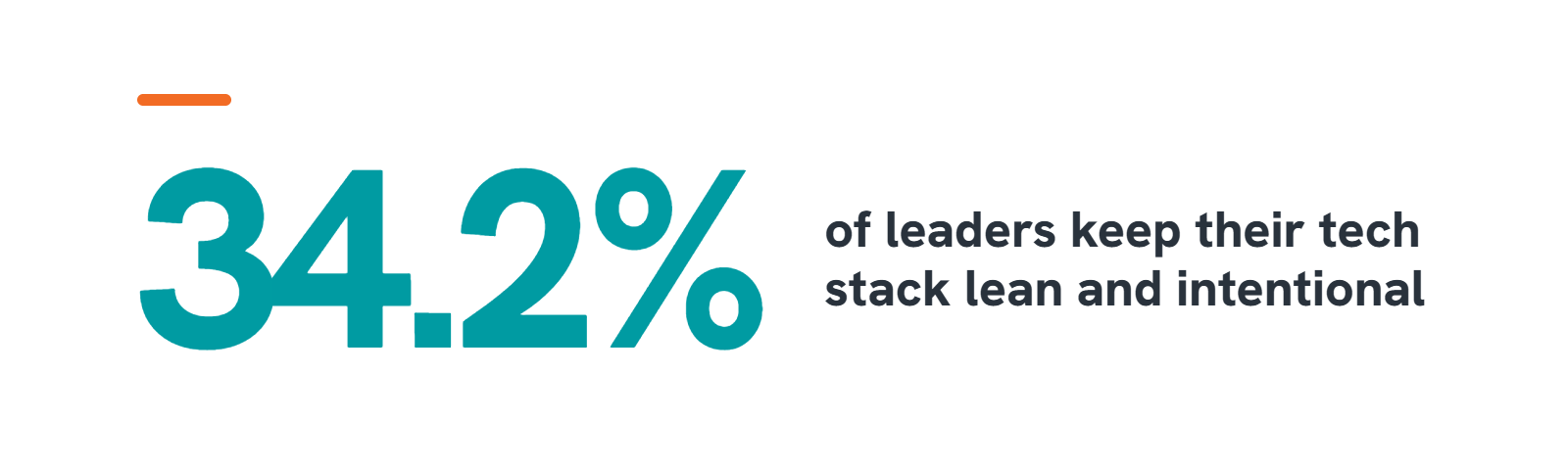
When asked how they would describe their current productivity tech stack:
-
34.2% Lean and intentional: they use a small number of tools that work well together
-
23.8% Functional but cluttered: they have more tools than they probably need
-
22.6% Constantly evolving: they’re always experimenting with new tools
-
11.6% Fragmented: their tools don’t integrate well, and they lose time switching between them
-
7.7% Haven’t given it much thought: they use whatever’s available
Lean and intentional is the most common answer, but it’s far from universal. Slightly more leaders (35.4%) describe their stack as cluttered or fragmented.
On a day-to-day basis, how many different apps, software, and AI tools do you use?
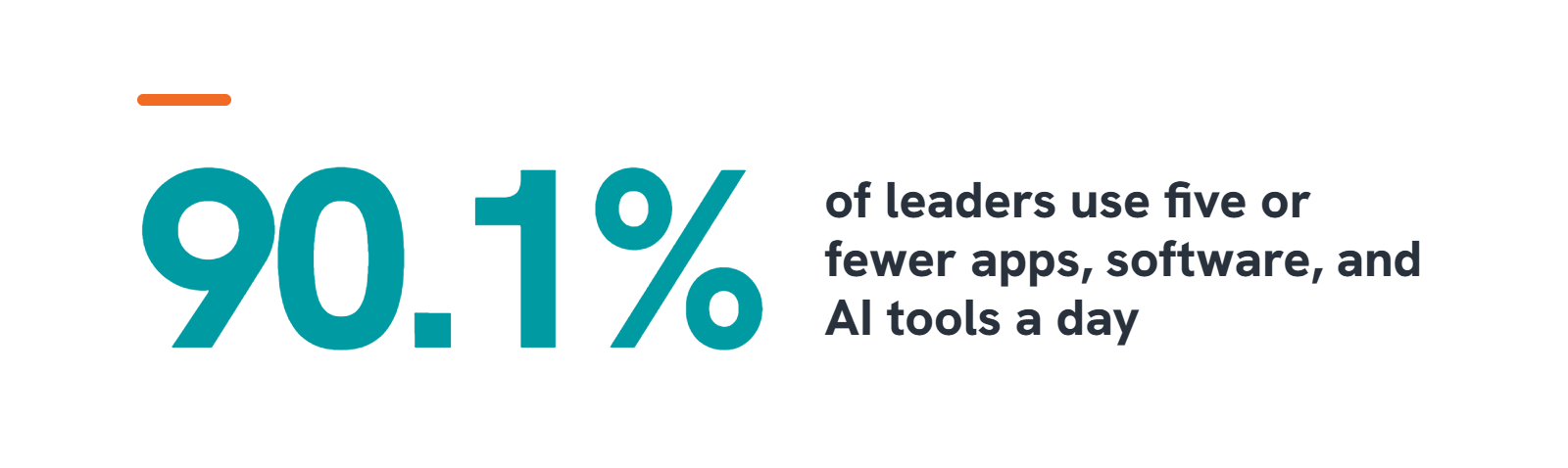
Even so, stacks are clearly getting smaller. The share of leaders using just one or two tools a day rose from 23% to 40.4%, and the other two groups both shrank.
| How many tools used in a day | 1 to 2 | 3 to 5 | 5+ |
| 2025 | 23.03% | 60.83% | 16.14% |
| 2026 | 40.4% | 49.7% | 8.8% |
Our survey didn’t ask why, but a few explanations seem likely. Leaders may be consolidating onto fewer platforms, replacing single-purpose tools with all-in-one software, or relying on AI features built into tools they already use. As noted earlier, that last change may also be blurring the line between “technology” and “AI.”
Do you seek out new productivity tools and apps?
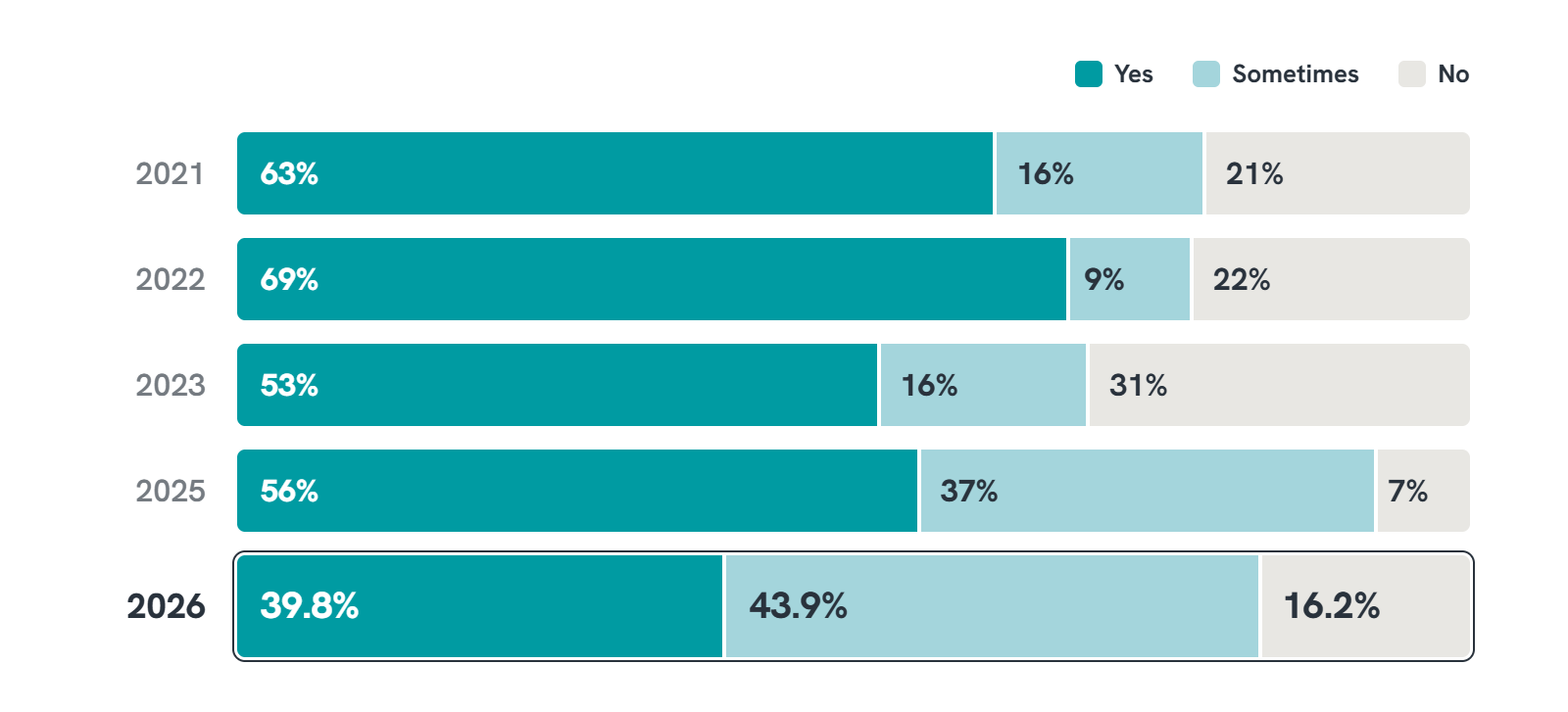
Leaders’ appetite for new tools has cooled, but it hasn’t gone away. The share actively seeking new tools fell to 39.8%, the lowest we’ve recorded. Most of that shift went to “sometimes,” which is now the most common answer.
Counting “yes” and “sometimes” together, 83.7% of leaders are still open to new tools. That’s down from 2025’s high, but above every year before it. In other words, leaders haven’t stopped looking. They’re just looking less often.
That fits the rest of this section. Leaders who have pared down their stacks may feel less need to shop around, and with 71% at least sometimes overwhelmed by notifications, few are eager to add another source of alerts. For the 22.6% who describe their stack as constantly evolving, the search goes on.
How often do you feel overwhelmed by the volume of notifications, messages, or alerts from your tools?
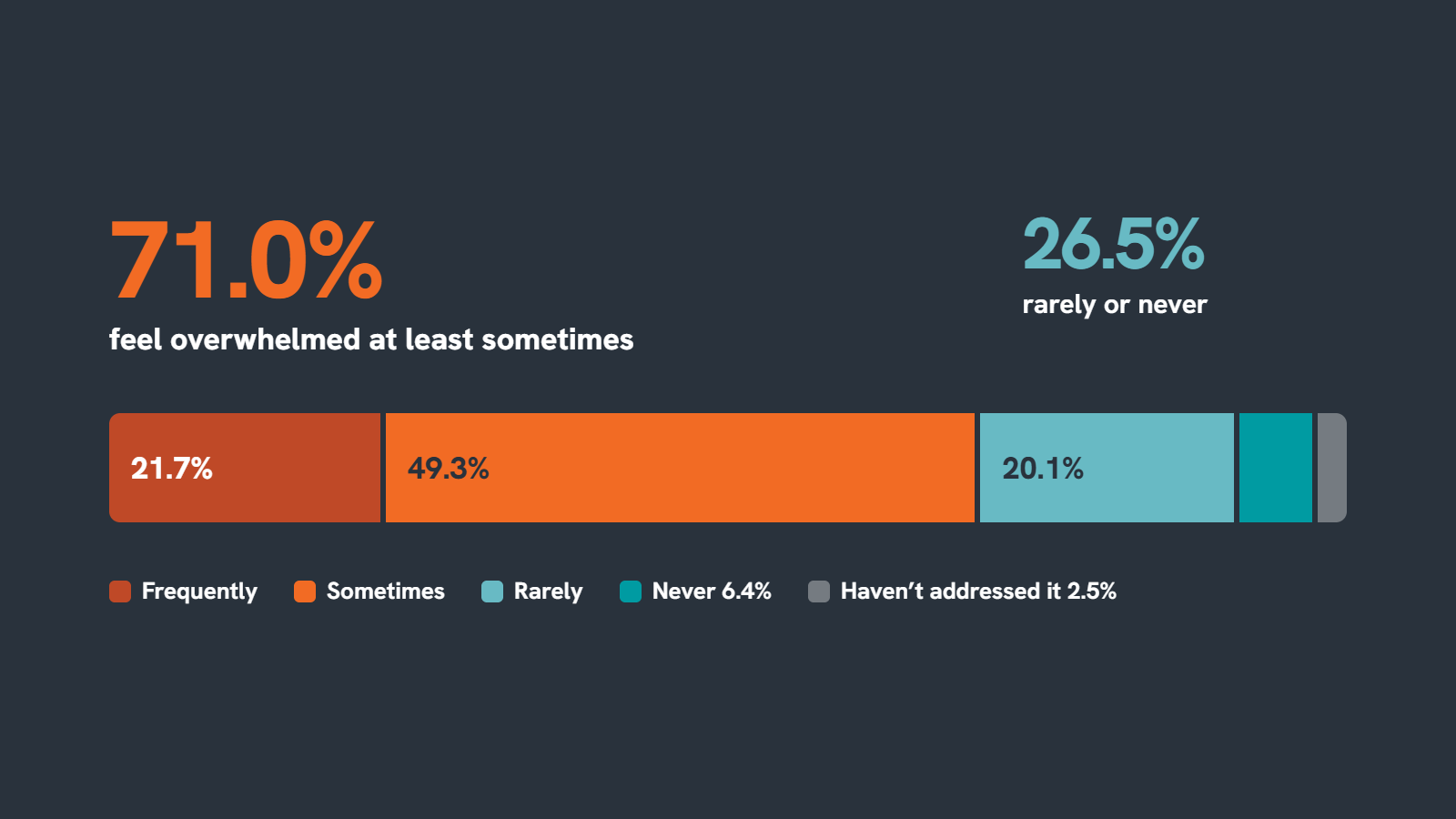
Digital noise is now a routine cost of modern work. For most leaders, it’s manageable but adds up. For about one in five, it’s one of the day's biggest distractions.
The sheer volume helps explain why. Microsoft’s Work Trend Index found that the average worker receives 117 emails a day and 153 Teams messages each weekday.
Leaders who avoid feeling overwhelmed tend to have taken deliberate steps. The 26.5% who rarely or never feel it say they’ve set up their tools to cut down on noise or built strong systems for handling interruptions. A leaner stack helps by reducing the number of places alerts come from, but their answers suggest that setup matters too.
How satisfied are you with your organization’s ability to implement new technology effectively?
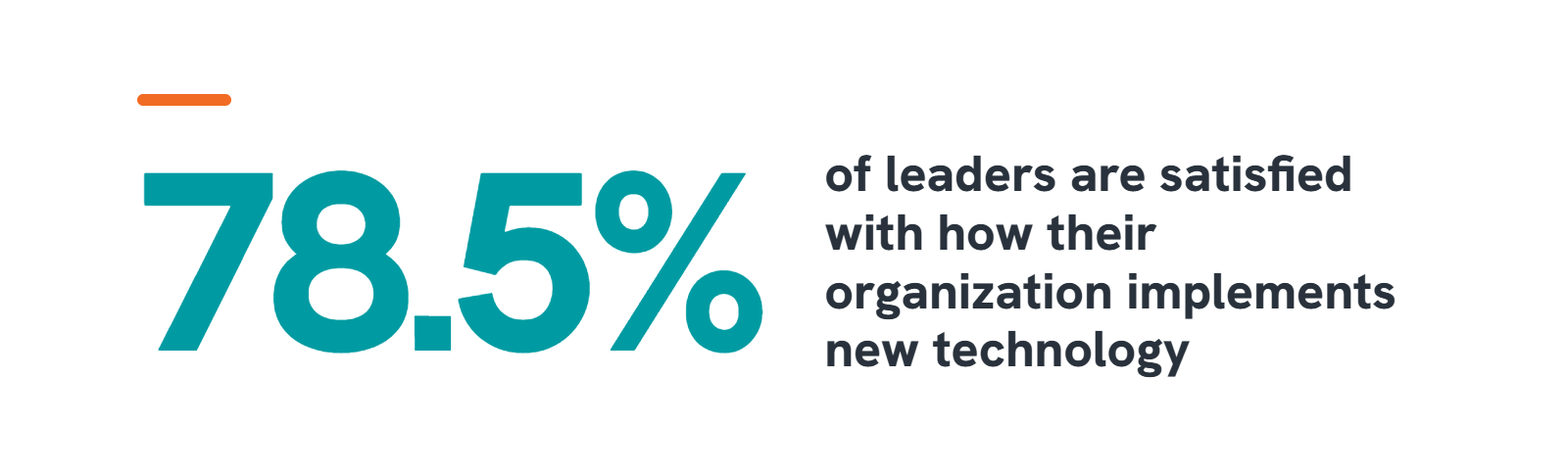
- 40.6% Very satisfied: we adopt new tools quickly and get people using them well
- 37.9% Somewhat satisfied: implementation works, but adoption is slower than I’d like
- 17.6% Neutral: some tools land well, others don’t
- 2.9% Somewhat unsatisfied: we buy tools we don’t fully use
- 1.0% Very unsatisfied: technology rollouts are consistently painful
Few leaders are unhappy with how their organization rolls out new technology. Only 3.9% say they’re unsatisfied. Still, fewer than half are fully satisfied, and the answer options show where the friction is. The tools get implemented, but people are slow to start using them well.
That gap matters more as stacks get smaller. When leaders rely on fewer tools, each one has to be widely adopted across the team to be worth it.
Do you feel like the software you use makes your life easier?
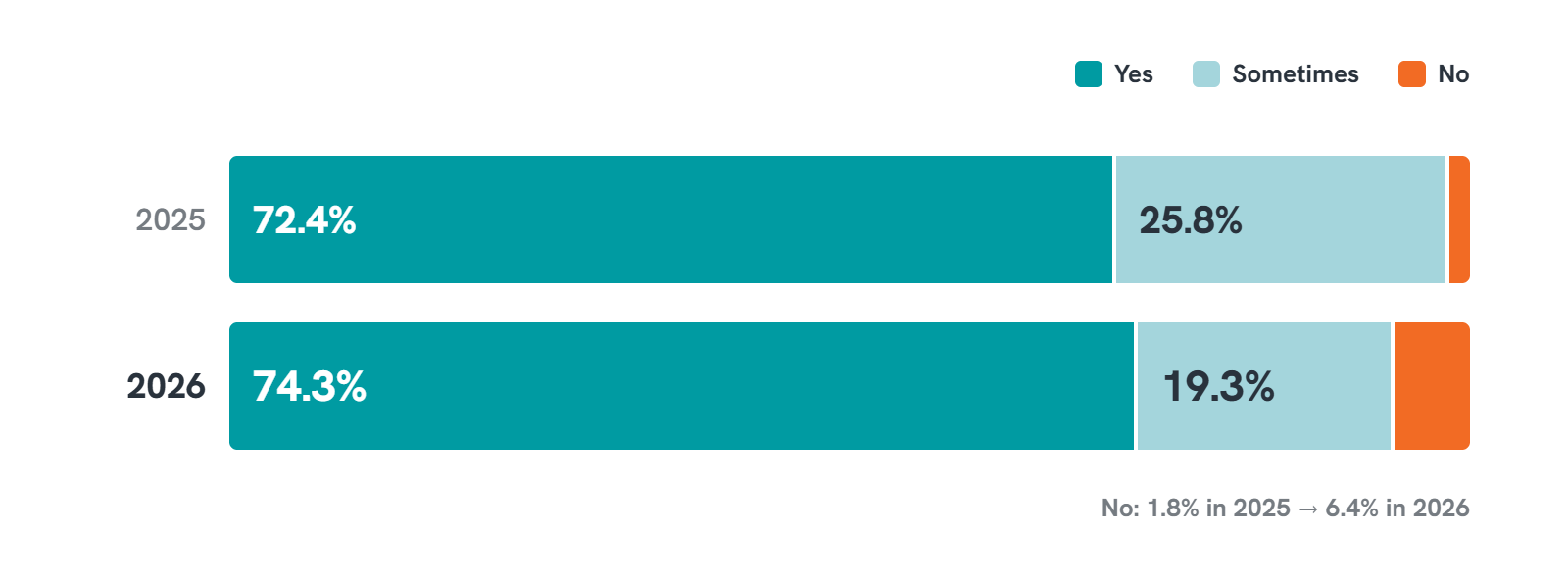
Leaders’ views on their software have become more clear-cut. “Yes” and “no” both grew this year, while “sometimes” fell by more than six points. The share saying their software doesn’t make life easier is still small, but it more than tripled.
Even so, nearly all leaders (93.6%) say their software makes life easier at least some of the time.
That steady satisfaction may also explain why fewer leaders named technology their biggest productivity driver this year. When tools work reliably, they fade into the background of daily work.
The AI Impact on Productivity
Have you incorporated any AI tools into your workday to enhance your productivity?
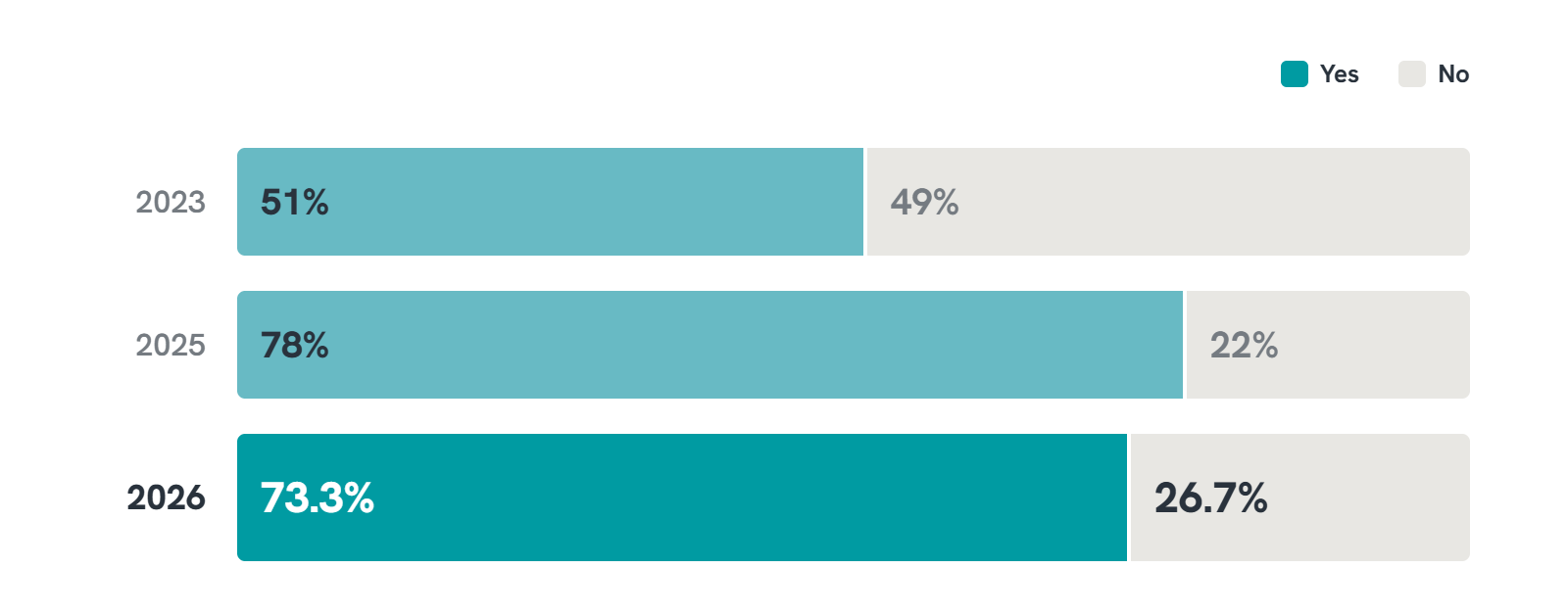
After a big jump between 2023 and 2025, AI adoption among leaders has leveled off. 73.3% have built AI tools into their workday, slightly below last year’s 78%. That looks more like a plateau than a reversal.
The share of leaders who use AI in some form is likely higher. Later in the survey, when we asked how leaders use AI, only 7.4% said they don’t use it at all. The gap suggests many leaders use AI occasionally without thinking of it as a deliberate part of how they work, perhaps because it’s increasingly built into the tools they already use.
Either way, leaders are well ahead of the broader workforce. Gallup finds that 53% of U.S. employees use AI at work at least a few times a year, and only 32% use it a few times a week or more.
How do you currently use AI in your workday?
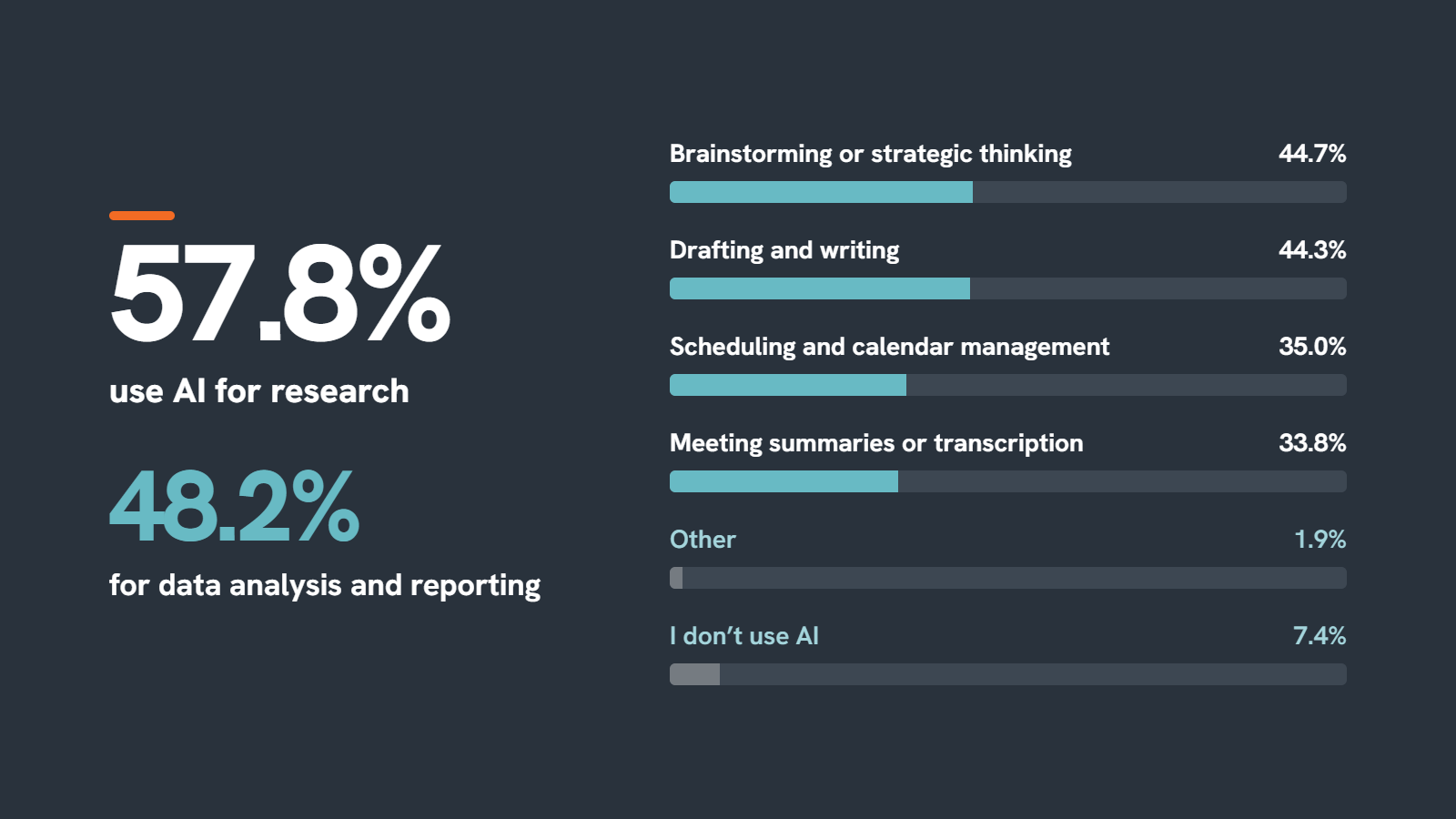
Leaders mostly use AI for thinking work. Research is the top use, followed by data analysis, brainstorming, and drafting. Scheduling and meeting support come last.
That stands out in a year when administrative tasks became leaders’ top productivity blocker. AI is helping leaders think faster, but it isn’t yet taking much admin work off their plates.
For leaders with an assistant, that work often goes to someone else. 72.8% of them rely on their assistant for scheduling. Coordinating calendars, priorities, and people still takes judgment and context, which may be why leaders keep it in human hands. For the nearly half of leaders without an assistant, that work likely stays with them.
Does your organization have a clear strategy for how AI and human workers should divide responsibilities?
-
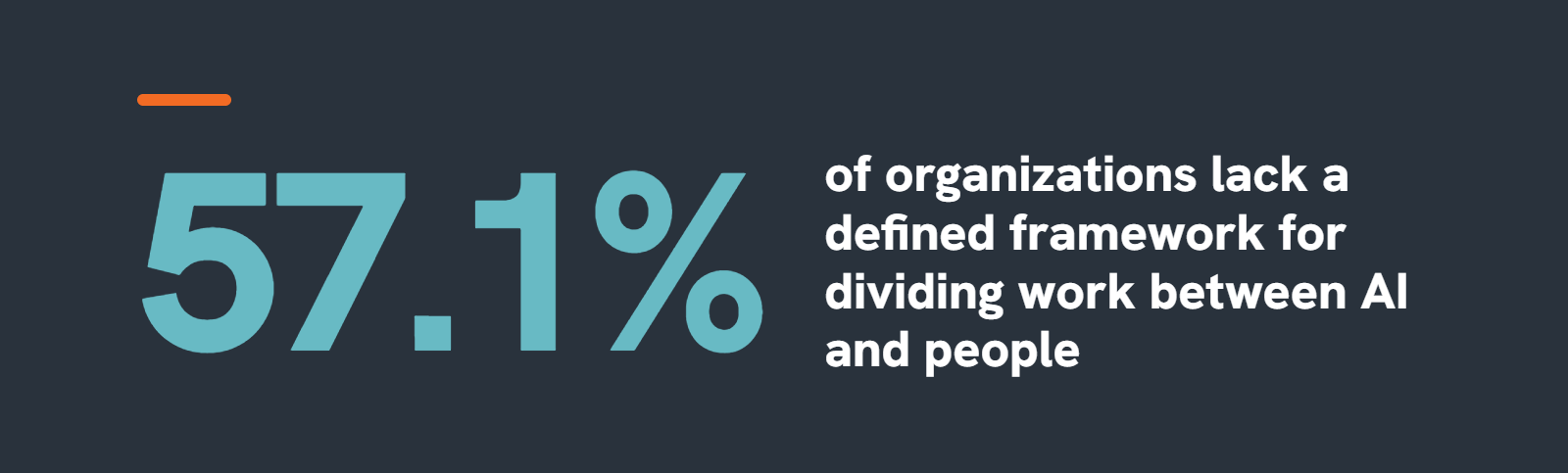
42.9% Yes: we have a defined framework with clear ownership
-
32.3% Partially: some guidelines exist, but it’s largely informal
-
20.9% No: it’s up to individuals to figure out their own approach
-
3.9% In progress: we’re actively developing one now
Most organizations are still working out who does what. Fewer than half of leaders say they have a defined framework for dividing work between AI and people, and one in five leave it entirely to individuals.
Employees may see an even larger gap. Gallup finds that three in four employees say their organization hasn’t communicated a clear plan for integrating AI. So even when leaders believe a framework exists, it may not reach the people who are supposed to follow it.
That gap affects adoption. Gallup also found that employees whose managers actively support AI use are nearly twice as likely to use it frequently. A clear division of labor, where people own judgment and AI handles speed, gives teams a reason to use their tools well.
Which AI tools do you use the most often?
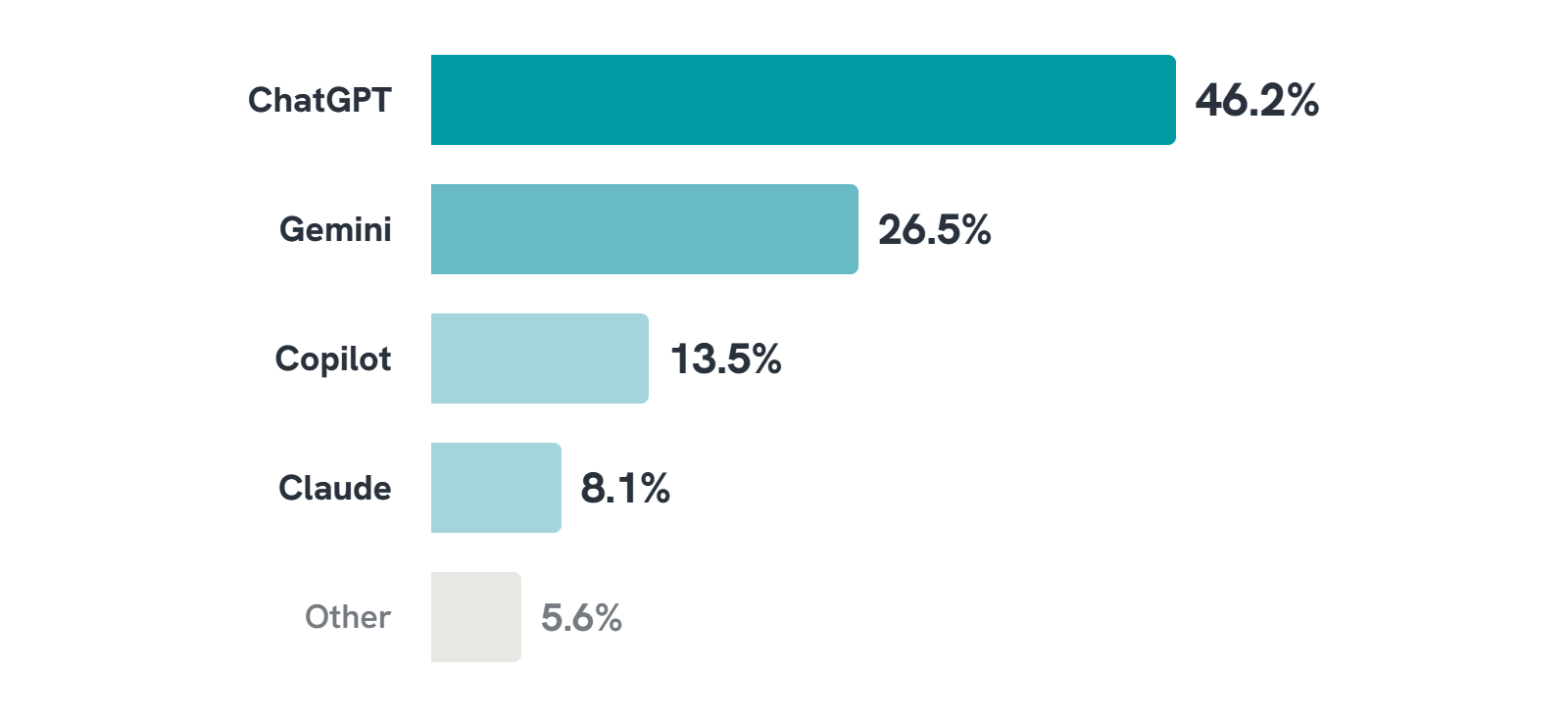
ChatGPT is still leaders’ most-used AI tool, but its lead keeps narrowing. Its share has fallen from 88% in 2023 to 60% in 2025 and 46.2% this year, as leaders spread their use across more options.
Gemini is now a clear second. Copilot and Claude, which appear as options for the first time this year, together account for about one in five responses. Because the answer options changed from last year, exact comparisons are limited. The direction is clear, though. Three years ago, one tool dominated; now leaders choose among several.
Are you more likely to choose a productivity tool if it advertises AI functionality?
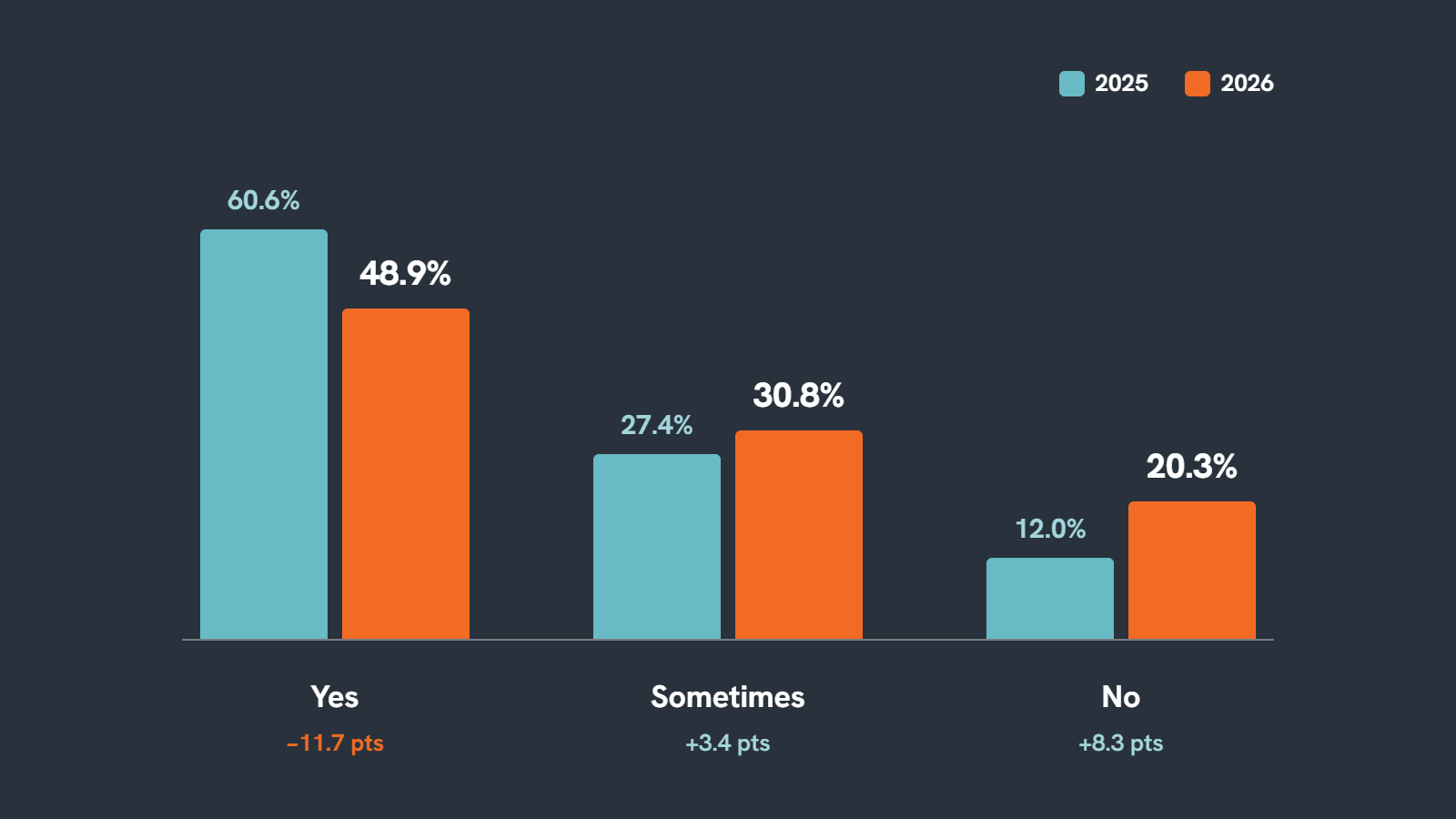
AI is still a selling point, but a weaker one. Fewer than half of leaders now say advertised AI makes them more likely to choose a tool, down nearly 12 points from 2025. Most still weigh it at least sometimes (79.7%, down from 88%).
That decline comes even as more leaders name AI a top productivity driver, and the two trends align. With AI now built into so many tools, an “AI-powered” label no longer sets a product apart. Last year, we noted that only tools that prove real value would earn long-term trust. Leaders now seem to judge AI by what it actually does for them.
How much do you trust the AI tools you use?
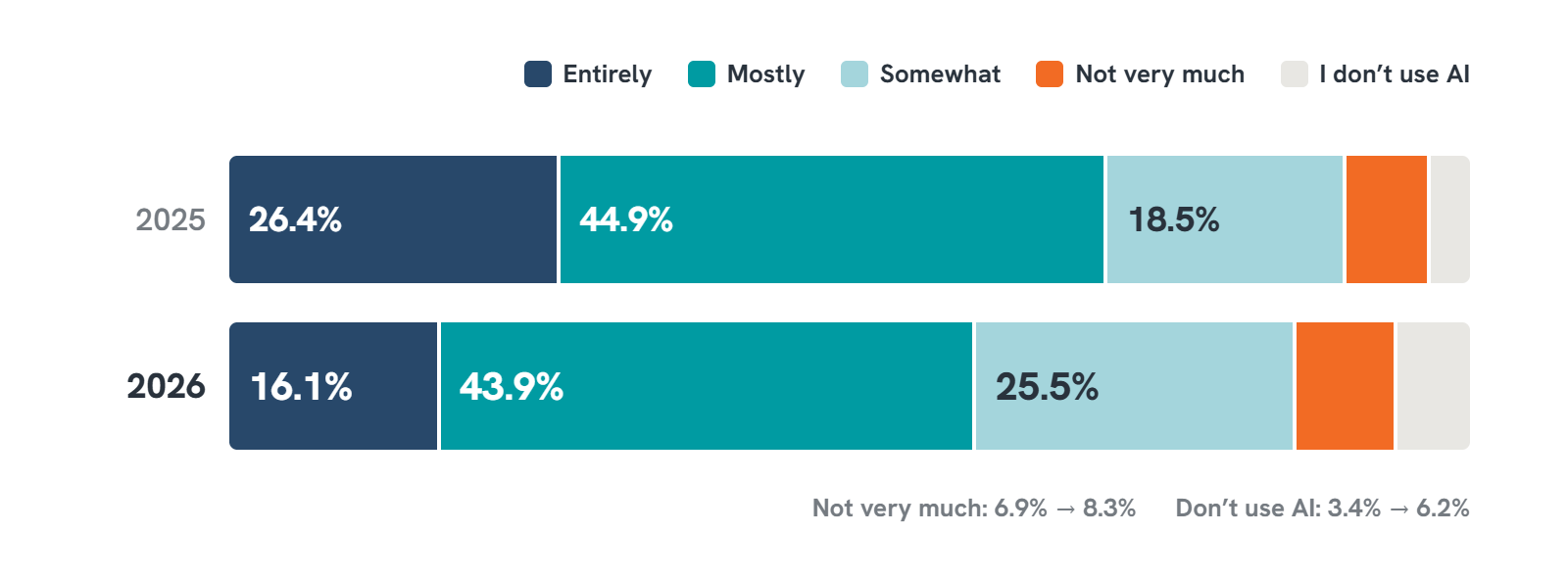
Leaders’ trust in AI is becoming more measured. The share who trust their AI tools entirely fell by 10 points, while “somewhat” grew by 7. Six in ten still trust AI mostly or entirely, down from about seven in ten last year.
Leaders aren’t alone in this. A University of Melbourne and KPMG study of more than 48,000 people in 47 countries found that 66% use AI regularly, but only 46% are willing to trust it. The researchers also found that trust has fallen as adoption has grown.
A drop in complete trust may actually be a healthy sign. The same study found that two-thirds of employees rely on AI output without checking its accuracy. Leaders who trust AI “mostly” may be more likely to review its work. That’s when AI delivers the most value: when people make the final call.
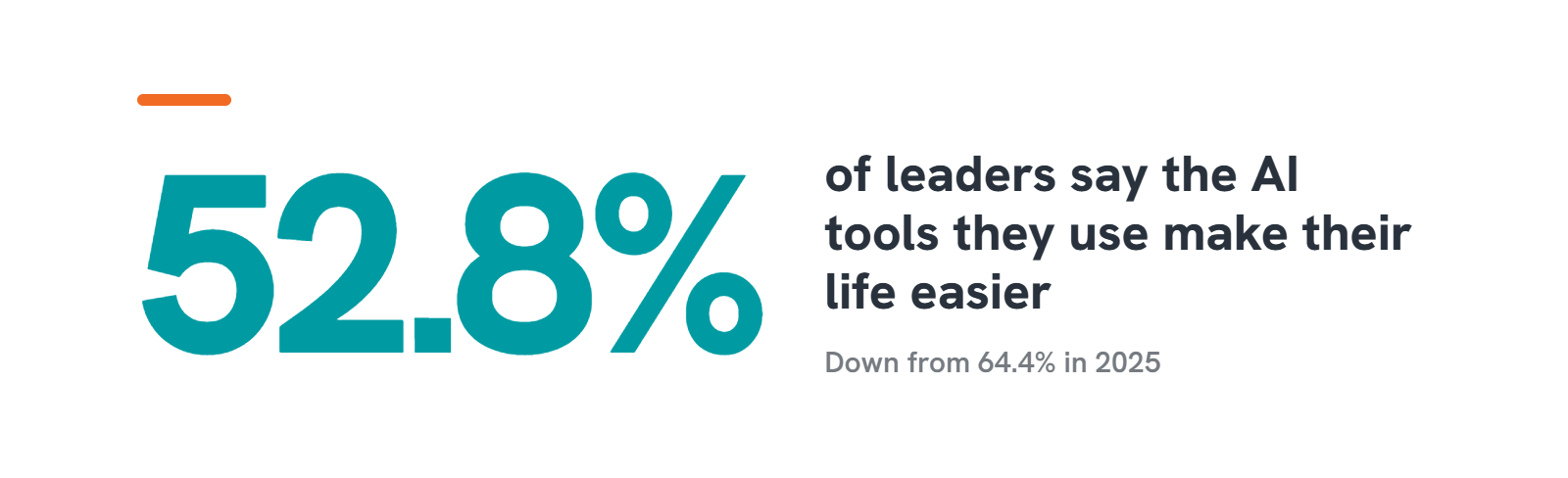
Fewer leaders say AI makes their lives easier. 52.8% now say yes, down from 64.4% in 2025. Most of that shift went to “sometimes,” which rose from 29.1% to 37.3%. “No” also edged up, from 6.5% to 9.9%.
Taken together, nine in ten leaders (90.1%) still say AI makes their lives easier at least some of the time, close to last year’s 93.5%. What has changed is how consistently it helps.
That matches the trust findings above. Leaders still value AI, but they see its benefits more selectively: helpful for some tasks, less so for others.
Do you feel like AI has given you or your team the meaningful productivity increase you expected?
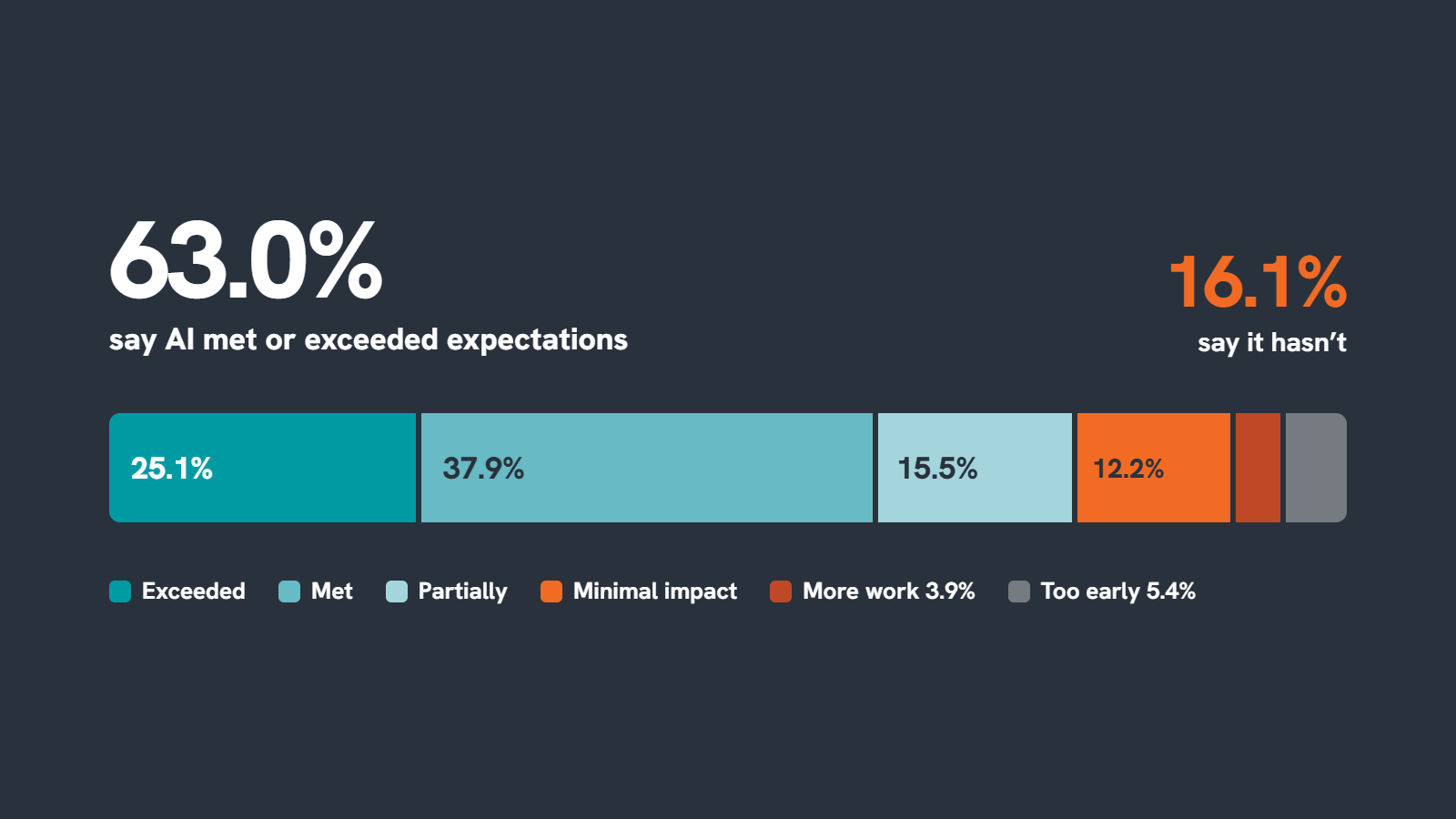
Even so, most leaders say AI is paying off. Nearly two-thirds (63.0%) say it has met or exceeded their productivity expectations, and a quarter say it has exceeded them. Only 3.9% say it has created more work instead of less.
That raises a question. More leaders say AI has delivered the productivity they expected (63.0%) than say it makes their lives easier (52.8%). Our survey can’t explain the difference directly, but two explanations fit the data.
AI may be creating room for more work. Berkeley Haas researchers, writing in Harvard Business Review, found that AI tools tend to intensify work: employees worked faster, took on a broader range of tasks, and stretched work into more hours of the day. If leaders put the time AI saves into more work, their output rises but their day doesn’t feel any lighter. That fits our workload findings, where half of leaders say they operate with little or no buffer.
Checking AI’s work takes time, too. As noted above, leaders who don’t fully trust AI are likely reviewing what it produces. Time spent verifying output can offset some of the time AI saves.
Either way, the gains look real but gradual. Gallup finds that just 14% of employees in organizations that have implemented AI strongly agree it has transformed how work gets done. For most, AI is speeding up existing workflows more than reinventing them.
Conclusion
Every edition of this report has found that most leaders are getting more productive. In 2026, that momentum leveled off. Just over half (54.9%) report improvement, and most of the rest (38.5%) are holding steady. The pattern is a plateau rather than a slide.
Leaders are also spreading their bets. Process, technology, and AI now sit within half a point of each other as expected drivers of productivity, after technology took a clear lead last year.
The enthusiasm around AI has matured into scrutiny. Nearly three in four leaders use AI in their workday, and most say it has met or exceeded their expectations. Yet complete trust fell, the “AI” label sells tools less effectively, and leaders are spreading their use across more platforms. Leaders are judging AI by its results.
What’s working in 2026:
-
Leaner tech stacks. 40.4% of leaders now use just one or two tools a day, up from 23%.
-
Trusted teams with clear roles. 79.3% are confident their team can execute without them, and 94.1% say roles are clearly or mostly clearly defined.
-
Long-term support. Leaders who find the right assistant keep them. Nearly half have worked with their current assistant for three years or more.
-
AI that delivers. 63% say AI has met or exceeded their productivity expectations.
-
Measured trust. Most leaders trust AI mostly rather than entirely, which leaves room to check its work.
What’s still a challenge:
- Admin work. It’s now the top productivity blocker, and nearly half of leaders don’t have an assistant.
- Focus time. More than half of leaders get less than 40% of their day for uninterrupted work.
- The skills gap. Finding talent with the right skills remains the biggest hiring challenge by a wide margin.
- Digital noise. 71% feel overwhelmed by notifications at least some of the time.
- Undefined AI roles. 57.1% lack a clear framework for dividing work between AI and people.
Last year, we said the most productive executives would be the boldest. This year, they’re the most deliberate. The leaders who stand out in 2026 and beyond will be the ones who recalibrate: choosing tools carefully, delegating to people they trust, and putting AI to work with clear guardrails and a human making the final call.
Methodology
Prialto surveyed 517 U.S. business leaders in September 2026 via Centiment. Year-over-year comparisons reference prior Prialto Executive Productivity Reports; no survey was conducted in 2024. This year’s sample includes a larger share of founders and owners of small companies than previous years, which likely affects several year-over-year comparisons. Some questions were reworded or had answer options added or removed; we note where this limits comparison.
Demographics
What is your current role?
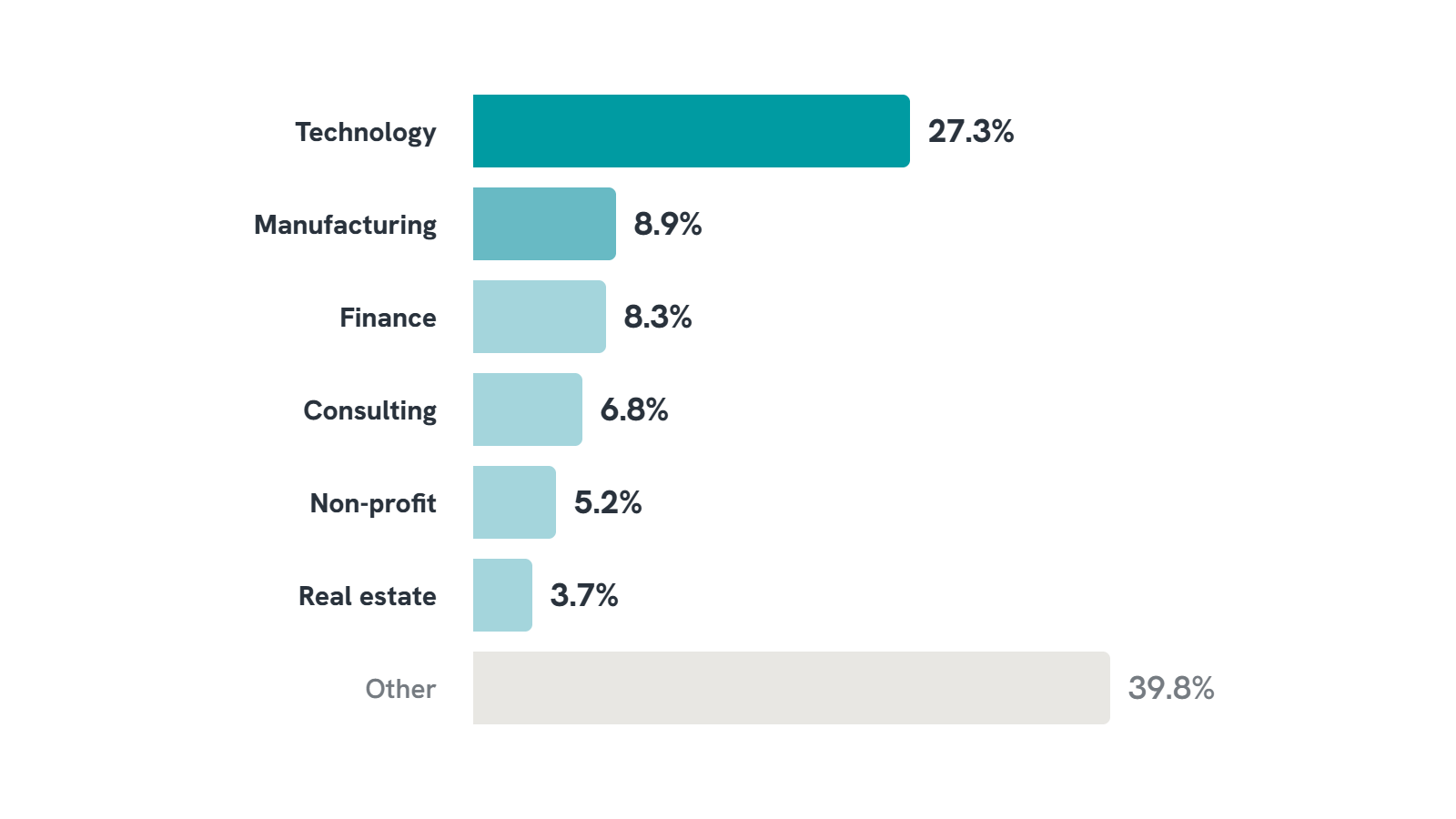
What industry do you work in?
What is your company size?
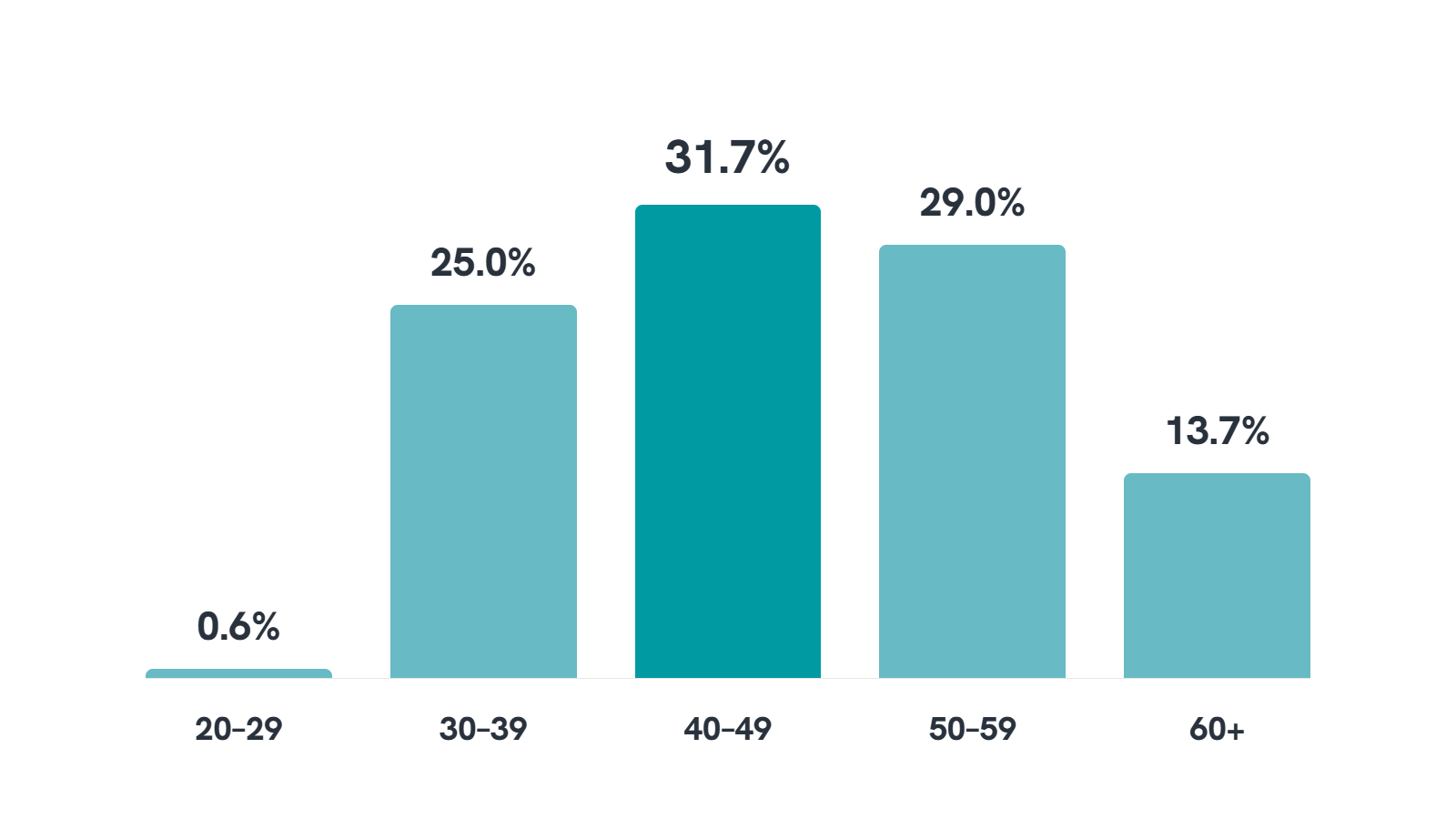
What is your age?
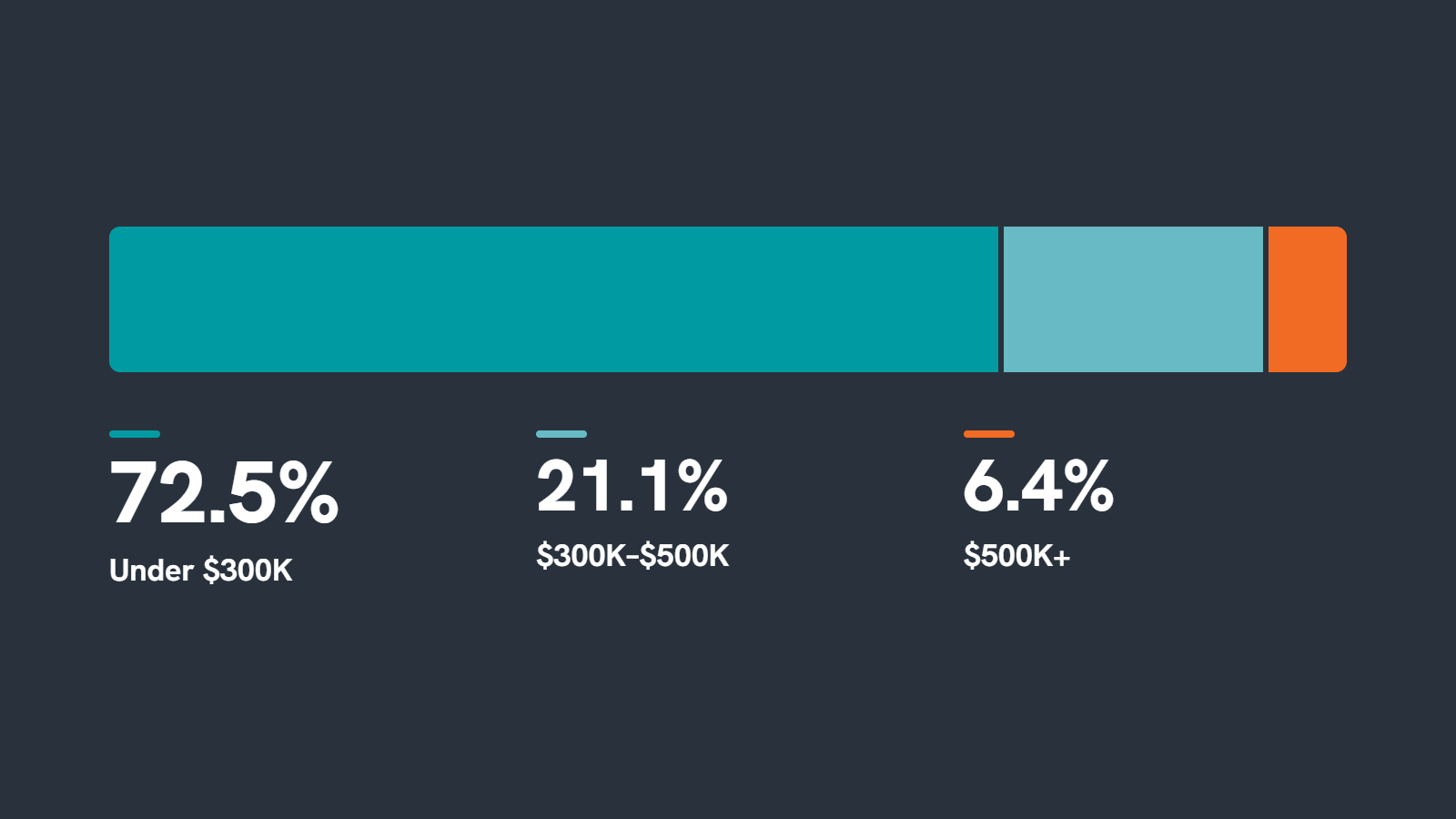
What is your annual income?
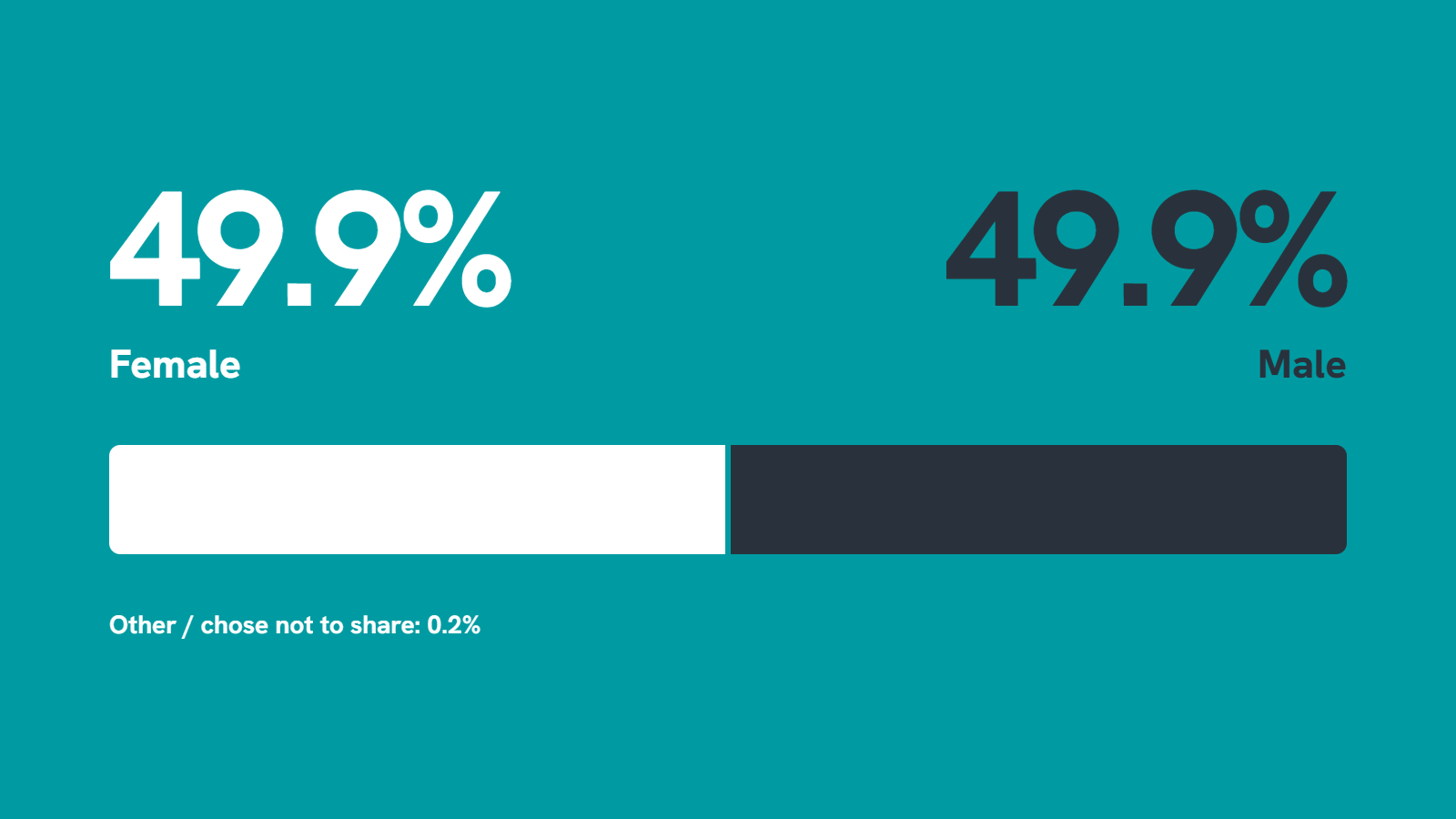
What is your gender?